Issue No. 006 · 14 October 2026

DIESEL INDUSTRY NEWS

The world's diesel industry, verified.  |  dieselindustrynews.com
Proudly brought to you by Berrima Diesel Service, on the tools and educating generations since 1956.
Bumper Celebration Edition
From the Editor's Desk

Six weeks ago this paper was two verified stories and a test email nobody but Andrew had seen. Today it has its own website, its own Facebook page, and readers checking in from half a dozen countries. We have been to trade floors in Bologna, submarine launches in Japan, fuel depots in Nigeria and the back page of a workshop in Berrima, NSW, chasing down every genuine diesel story we could verify and leaving the rest on the floor. This issue runs bigger than usual because there was simply too much good, checked news to hold back this fortnight. Grab a cuppa, there is a lot in here.

Bob, Editor

Stop Press · the last 48 hours
← Back to the Diesel Industry News homepage
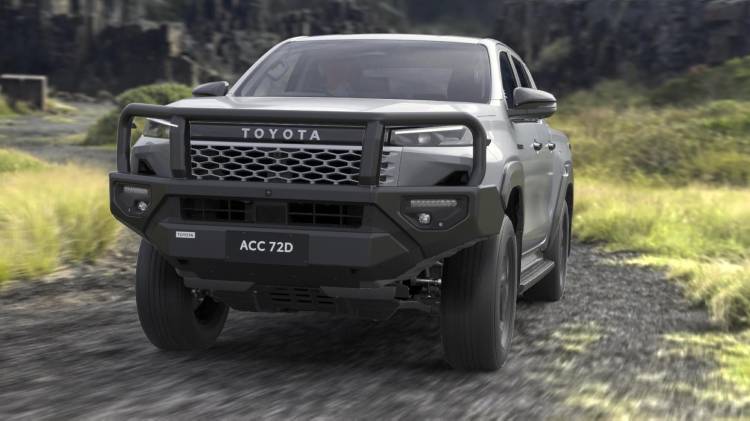
Toyota HiLux
Image: Toyota Australia
Front Cover

Toyota agrees to $750 million settlement over HiLux, Prado, Fortuner diesel particulate filter defect

Why it matters: it's the final numbers on Australia's biggest diesel-vehicle defect case, closing out a saga that's dogged Toyota's diesel line-up since 2015, and it's exactly the kind of DPF fault every diesel workshop in the country has dealt with firsthand.
Toyota Australia has agreed to pay up to $750 million to settle two long-running class actions over faulty diesel particulate filters in the HiLux, LandCruiser Prado and Fortuner. The settlement covers 264,170 vehicles bought between October 2015 and April 2020, fitted with the 2.4-litre 2GD-FTV or 2.8-litre 1GD-FTV turbo-diesel engines. The DPFs were prone to clogging and triggering excess fuel dilution, sometimes damaging engines. The Federal Court found a "core defect" back in 2022, and the fight over how much Toyota owed dragged through an appeal and a High Court referral before this settlement. It still needs Federal Court approval. A Toyota spokesperson said the company "has agreed to a settlement in the DPF Class Action case" and apologised for the inconvenience caused. Owners should check with their legal representatives on eligibility.
Source: CarExpert, 13 October 2026 (corroborated across CarExpert, Carsales, 4x4Australia, CarsGuide).
Desk 1 · Australia & New Zealand, the home desk
Isuzu D-Max

Isuzu rules out electric D-Max for Australia, doubles down on diesel

Why it matters: Australia's second-best-selling ute maker has formally killed plans to bring the battery-electric D-Max here, confirming diesel still accounts for 84 per cent of its light commercial sales.

Isuzu has confirmed it will not export the battery-electric D-Max to Australia, reversing earlier signals from 2024 that the country was an intended market. Isuzu Motors International Operations said the decision was made "to prioritise products that align with our current customer needs." Isuzu Ute Australia executive general manager Rod Caldwell said the BEV, which entered Thai production in April 2025 with a 263km range, "wasn't the right fit for Australian customers in its current form," pointing to towing, payload and long-distance travel needs. Diesel remains 84 per cent of IUA's light commercial sales this year. Caldwell has separately flagged Isuzu is now looking at mild-hybrid assistance and, further out, a possible plug-in hybrid diesel to rival the BYD Shark 6, though nothing is costed, specced or dated yet.

Source: carsales.com.au, 30 September 2026 (corroborated by GoAuto, CarExpert, Drive.com.au).
Image: Isuzu UTE Australia
Chery Stockman
PHEV · diesel

Chery opens reservations for diesel hybrid Stockman ute, launch slips to February

Why it matters: Chery's diesel PHEV ute has moved from announcement to an actual reservation queue in Australia, even as its on-sale date pushes back roughly three months and pricing stays unannounced.

Chery Australia opened formal reservations for its Stockman dual-cab ute on 1 October, with a $1,000 refundable deposit securing a build slot. First deliveries have slipped to 1 February 2027, having originally been pencilled in for the final quarter of 2026. Pricing is still not announced, but reserving now gets buyers a $2,000 Bunnings gift card and three years (45,000km) of free servicing. The Stockman runs a 2.5-litre turbo-diesel paired with a 34kWh LFP battery and electric motor for a combined 350kW and 800Nm, up to 96km of electric-only range on the WLTP cycle, claimed 1.1L/100km combined fuel use and 3,495kg braked towing. Front, centre and rear locking differentials are standard, and Chery says output equates to 469hp, 100Nm more torque than the BYD Shark 6 Performance. Payload, at 765kg, sits under Chery's own earlier 1000kg goal. Chery Australia COO Lucas Harris called the reservation opening "an important milestone," and said the brand has had "a phenomenal response" to the ute. A petrol PHEV variant follows in the second half of 2027, a separate model from the diesel Stockman.

Source: Chery Motor Australia via PR Newswire, 1 October 2026; specs firmed up through to 11 October via CarExpert, EV Central, Drive.com.au and Carscoops, all consistent.
LDV D90

LDV brings diesel back to the D90 with a bigger engine and a new flagship

Why it matters: a genuine new product update for LDV's seven-seat SUV that broadens the diesel line-up right as other budget Chinese brands are also doubling down on diesel in Australia.

LDV has put turbo-diesel power back into the D90 SUV after about two years away, and used the relaunch to add a new flagship grade. The 2.5-litre four-cylinder diesel now makes 163kW and 520Nm, up from the old 2.0-litre's 160kW and 480Nm, paired with an eight-speed auto and standard four-wheel drive. Braked towing climbs to 3500kg from 3100kg and fuel use drops to a claimed 8.1L/100km. The range grows from three variants to five, topped by a new diesel-only Luxe grade with a panoramic sunroof, 360-degree camera, JBL audio, heated and ventilated front seats, 20-inch wheels and front and rear diff locks. A launch offer knocks $4500 off drive-away pricing until 31 October.

Source: carsales.com.au, 8 October 2026, cross-checked against CarExpert and LDV Australia's own model page.
Image: LDV Australia
Mahindra Scorpio

Mahindra slashes price on Australia's cheapest seven-seat diesel SUV

Why it matters: in a market where diesel sales are sliding and fuel prices are high, Mahindra is cutting thousands off its budget diesel SUV to keep it moving, a sharp contrast to brands quietly dropping diesel altogether.

Mahindra Australia has cut the price of its Scorpio seven-seat diesel SUV, pitched as the country's most affordable diesel 4x4 with three rows. The Z8+ now starts at $43,990 drive-away, a $4000 saving, while the Z8L+ drops to $45,990, down $3000. Both run a 2.2-litre turbo-diesel four making 129kW and 400Nm through a six-speed auto and four-wheel drive. The offer applies only to 2025-built stock and runs until 31 December 2026.

Source: CarExpert (William Stopford), reported 10 October 2026.
Image: Mahindra Australia
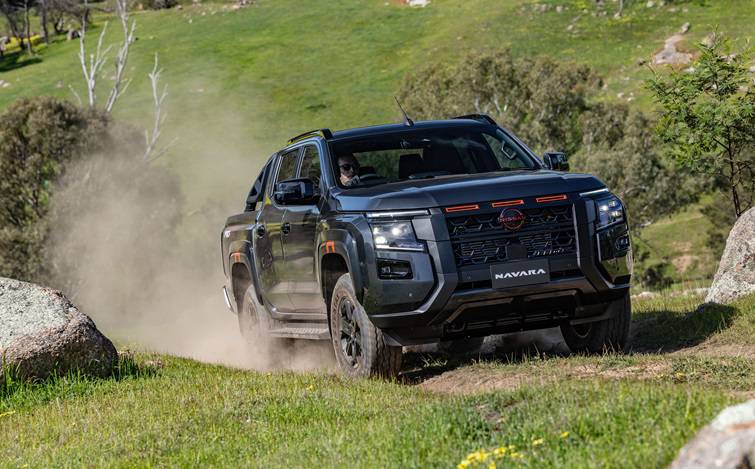
Nissan Navara Pro
Not a diesel hybrid

Nissan axes diesel Navara Warrior program, bets ute future on Chinese-built petrol PHEV

Why it matters: Nissan Australia has pulled the pin on a locally-engineered hardcore diesel 4x4 variant barely 11 months after showing it off, a sign the brand sees more future in a plug-in hybrid than in another diesel flagship.

Nissan Australia has cancelled development of the D27 Navara Warrior, a tougher, Premcar-engineered diesel variant first shown as a concept in November 2025. A company spokesperson said: "With the upcoming arrival of the Navara PRO PHEV, we have decided not to proceed with the D27 Navara Warrior program." The Navara Pro, developed with China's Dongfeng, lands in Australia in 2027 with a 2.0-litre turbo-petrol plug-in hybrid system good for a combined 300kW and 800Nm, 3.5-tonne towing and roughly 1000kg payload. Navara sales have fallen 48 per cent year-on-year to 3227 units. Worth stating plainly for the record: the replacement is petrol-based, not a diesel hybrid, even though it's taking over a diesel nameplate's job.

Source: CarExpert (William Stopford), cancellation reported 12 October 2026, corroborated by Nissan's own global newsroom release.
Image: Nissan Global Newsroom

Bowen rules out Russian diesel for Australia despite Trump's deal with Putin

Why it matters: Australia has no intention of touching the Russian diesel Washington just cleared for import, a clear signal to local fleets that Australia's diesel supply chain isn't changing tack over this.

Federal Energy Minister Chris Bowen has ruled out Australia taking any of the Russian diesel the Trump administration has just cleared for import to the United States, telling ABC's Weekend Breakfast that Australia "doesn't need or want Russian fuel." Bowen said Australia has arrangements with trading partners to keep Russian-origin fuel out of the country, and said "we do not want Vladimir Putin to benefit" from the war. He stopped short of criticising Washington directly, framing Australia's position as opposition to Russia being rewarded for invading Ukraine, not a swipe at the US deal itself. The comments follow President Trump's call with Vladimir Putin on 9 October, after which Treasury issued a general licence authorising Russian diesel imports into the US (see Desk 8).

Source: ABC News, 10 October 2026, corroborated by Bloomberg, AAP, SCMP and The Nightly.
Photo: none sourced.
Toyota HiLux in the bush

Diesel sales slump but Toyota says the bush can't do without it

Why it matters: diesel's market-share slide is real and accelerating, but Toyota's own data shows regional and rural fleets, the core customers Australian diesel workshops service, aren't following the cities toward EVs any time soon.

VFACTS data to the end of September shows diesel's new-vehicle market share has dropped from about 33 per cent in 2025 to 24.3 per cent this year, with diesel sales down 25.5 per cent year-on-year as hybrid, EV and plug-in hybrid uptake surges. Ford Ranger and Toyota HiLux sales have each fallen around 10 per cent. But Toyota Australia sales VP John Pappas says diesel remains critical because nearly 54 per cent of combined HiLux and LandCruiser buyers live and work outside major cities, where towing, off-road capability and long-distance range don't suit battery EVs yet. Toyota's hedging its bets regardless: a battery-electric HiLux launched in May 2026, with a hydrogen fuel-cell HiLux planned for 2028.

Source: CarExpert (Damion Smy), 8 October 2026.
Image: Toyota Australia
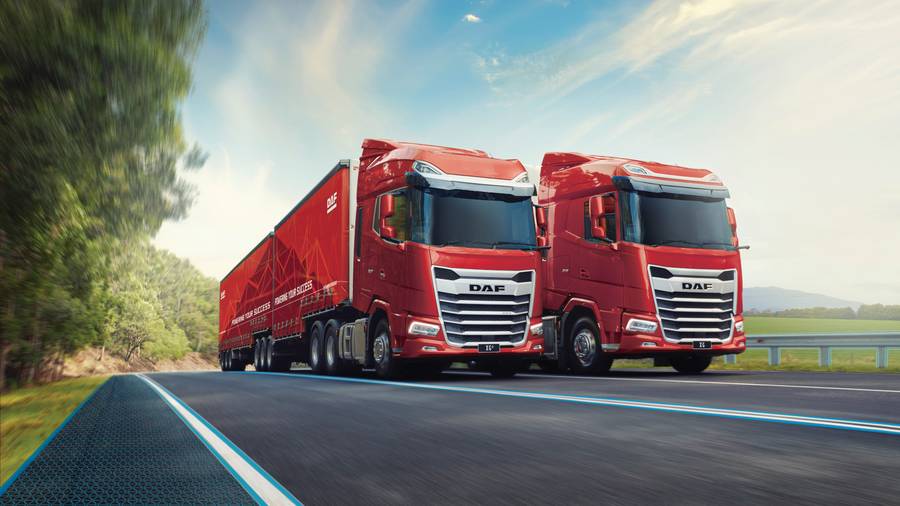
DAF New Generation truck

DAF rolls out full "New Generation" truck range across Australia

Why it matters: PACCAR Australia has launched its biggest DAF range refresh in years locally, four models covering everything from city distribution to flagship long-haul, with the XG and XD partly built here. A direct signal of confidence in diesel linehaul trucking even as electric trials get louder press.

PACCAR Australia has officially launched the New Generation DAF range nationwide, four trucks aimed at different jobs. The XB runs a 7-litre Cummins PX-7 for city work, the XD gets DAF's 11-litre MX-11 for distribution and vocational duties, the XF carries the 13-litre MX-13 for interstate freight, and the flagship XG uses a 15-litre Cummins-Paccar PX-15 pushing 660hp and 3,200Nm for long-haul. The XG and low-tare XD are built locally at the Bayswater plant. Trucks are available now through DAF dealers, with a roadshow running through December. PACCAR Australia managing director Damian Smethurst said the trucks blend "global engineering with Australian manufacturing expertise."

Source: Truck & Bus News, 3 October 2026, cross-checked against Big Rigs and OwnerDriver.
Image: DAF Australia
Australia Needs Mechanics · monthly feature
Berrima Diesel Service recruiting poster
Artwork: Berrima Diesel Service

Australia needs you: there has never been a better time to pick up the spanners

Every workshop in the country is looking for the next good mechanic. The work is there, the vehicles are there, and the demand for skilled hands has never been higher. Here is the honest state of play, and why a trade under the bonnet is one of the surest careers in Australia today.

Walk into almost any workshop in Australia and ask the boss what keeps him awake at night. It won't be the price of parts. It will be finding people. The numbers back him up. Industry research commissioned by the Australian Automotive Aftermarket Association put the national gap at more than 40,000 workers, roughly 27,000 qualified technicians and 13,500 apprentices, and trade bodies have called the skills shortage the industry's most pressing issue ever since. The Victorian Automobile Chamber of Commerce reported that one in three automotive businesses has a technician vacancy that has stayed open for more than six months, and that only about 37 per cent of advertised technician jobs are ever filled. In plain terms: for every ten workshops advertising, six or seven are still looking half a year later.

That is a problem for the industry. For a young person choosing a career, it is the opposite. Scarcity is leverage. A qualified technician today can choose the workshop, choose the town, and negotiate.

"Scarcity is leverage. A qualified technician today can choose the workshop, choose the town, and negotiate."

The work is not going anywhere, even as the market shifts

The latest VFACTS/Electric Vehicle Council figures for September 2026 put EVs at about 24 per cent of new-car sales, now outselling petrol (23.9%) and diesel (23.1%) individually, with petrol and diesel combined still around 47 per cent. Every diesel ute, every farm tractor, every truck, boat and generator already on Australian roads is a job waiting for someone with the skills, for the next fifteen to twenty years at least. And the EVs need people too: high-voltage systems, battery diagnostics and software-heavy vehicles are creating a second career path that barely existed a decade ago. Whichever way the market turns, the mechanic wins.

The pipeline needs help, and it's worth saying why

Official NCVER figures show that about 62 per cent of automotive and engineering apprentices finish their trade within six years, the best result in more than a decade, but it still means close to four in ten never get their ticket. When apprentices are asked why, the answers are consistent: low first-year wages while the cost of living climbs, thin mentoring, and long, expensive commutes to training. In an AAAA survey of 600 automotive apprentices, 69 per cent named living costs as their biggest challenge. Then, on 1 January this year, the Federal Government halved the two main apprenticeship payments for trades on its Priority List: the employer's Priority Hiring Incentive and the apprentice's Training Support Payment each dropped from $5,000 to $2,500. A new $5,000 Key Apprenticeship Program incentive was created at the same time, but it covers clean-energy and housing trades, not motor mechanics. The Motor Trades Association of Australia said plainly that cutting the incentives that make apprenticeships viable will only compound the crisis.

So what does a good future look like?

It looks like a small family workshop that has been fixing diesels on the same highway for seventy years and is now teaching the third generation. It looks like a first-year apprentice who is scared of a common-rail injector in March and pulling and testing one unsupervised by Christmas. It looks like a trade that cannot be sent offshore, cannot be replaced by an app, and gets more valuable every year the shortage continues. If you are a school leaver, a parent, a career adviser, or someone in their thirties wondering whether it is too late, it isn't. Australia needs you. Help keep Australia moving.

This Month in the Trade
  1. 21-year-old automotive technology apprentice Edie Thurtell, from mycar Tweed Heads, is representing Australia at WorldSkills Shanghai 2026 (22-27 September) after winning gold at the WorldSkills Australia nationals, a great example of where the trade can take a young apprentice.
  2. VACC marked World EV Day in September by spotlighting the technicians and workshops, 5,000 member businesses across Victoria and Tasmania, who've retrained and reinvested to service EVs alongside their traditional work, framed as a people story, not a tech story.
  3. New FCAI VFACTS figures published this month confirm EVs, petrol and diesel are now running close together in new-car sales, meaning the workshops of tomorrow will need both traditional and high-voltage skills, good news for anyone starting a trade now.

Advertisement
Pocket Tuner advertisement
← Back to the Diesel Industry News homepage
Desk 2 · Road Vehicles & Performance
Mitsubishi Pajero

Mitsubishi confirms new Pajero keeps 2.4L diesel, not a rebadged Triton

Why it matters: Australia is getting the revived Pajero nameplate in 2027 as the Triton-based Pajero Sport's big brother, and Mitsubishi's own engineers are going out of their way to kill the "it's just a tray-back SUV" perception before it starts.

Mitsubishi's chief vehicle engineer Takaaki Matsumoto says the new Pajero, unveiled globally on 2 September 2026, shares only the front section of its ladder frame and the front floor with the Triton ute. "Most parts or components are renewed from the Triton," he told media ahead of the Australian launch window. The Pajero gets its own sheet metal, interior and an updated 2.4-litre diesel: a second-generation 4N16 unit running a single variable-geometry turbo in place of the Australian Triton's twin-turbo setup, putting out up to 480Nm through a new eight-speed automatic, up from six. About half the frame uses high-tensile steel, with an aluminium bonnet. It's the first ladder-frame Pajero since 1998. Built in Thailand, it launches there first, then Japan and Australia within Japanese fiscal 2026.

Source: Mitsubishi Motors Corporation global newsroom, 2 September 2026; Drive.com.au (Alex Misoyannis), 10-11 October 2026.
Image: Mitsubishi Motors Corporation, Japan
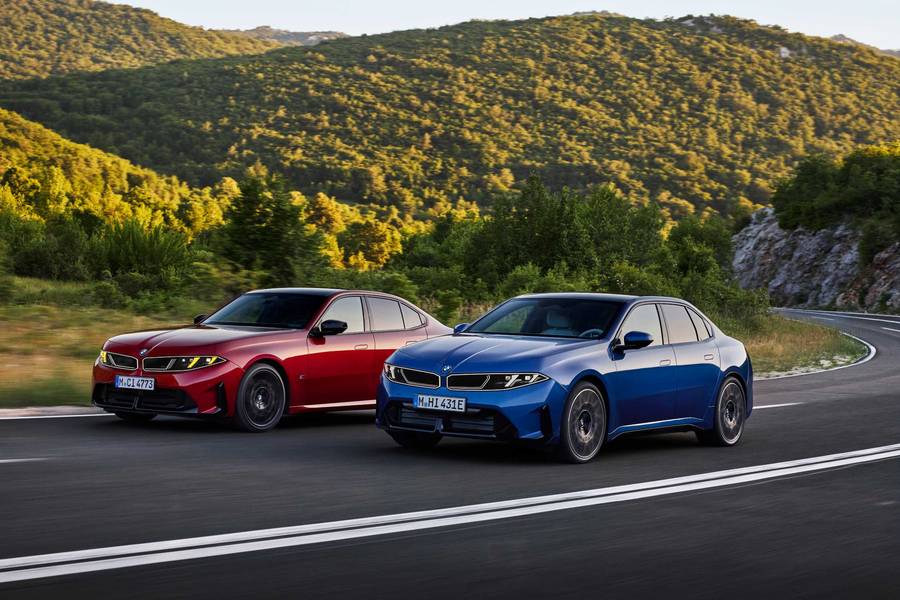
BMW 3 Series

BMW drops diesel from the new 3 Series as European demand keeps shrinking

Why it matters: the 3 Series has offered a diesel since 1975, one generation excepted. Losing it, right as Euro 7 rules bite, is a signal of how fast diesel demand is fading in BMW's home market.

BMW has confirmed the new, eighth-generation 3 Series sedan launches in Europe with no diesel option, the first time that's happened since the original E21 in the 1970s. A BMW spokesperson told BMWBLOG the car will be offered exclusively with petrol engines, either on their own or as part of a plug-in hybrid setup. BMW won't spell out its reasoning, but the timing lines up with tougher Euro 7 emissions rules landing 29 November 2026 and years of diesel take-up sliding across Europe, where hybrids (36.9 per cent) now comfortably outsell diesel, down from 51.6 per cent diesel share in 2015.

Source: BMWBLOG, 29 September 2026, corroborated by CarExpert Australia, Motor1, Automotive News and Carscoops.
Image: BMW Group Germany

Ford recalls three Brazil-built Ranger diesel utes over brake fluid leak

Why it matters: a tiny recall, but a genuine, officially registered diesel safety issue on Ford's newest Ranger model year in South America.

Ford do Brasil has issued an official recall covering three examples of the 2027-model Ranger fitted with the 2.0-litre turbo-diesel engine, all built on 1 June 2026. The fault sits in the brake master cylinder outlet tube assembly, which can develop a manufacturing defect that lets brake fluid leak out, triggering a warning light, demanding extra pedal pressure and lengthening stopping distances. The fix is free: an hour's inspection and tube replacement at authorised dealers, with repairs starting 8 October 2026. This is separate from an earlier, unrelated August 2026 Brazilian recall and a much larger US recall over a petrol-spec centre-screen fault.

Source: Ford do Brasil official recall notice, dated 24 September 2026, widely reported 28-29 September 2026, corroborated by Garagem360.
Photo: Ford Brasil (image unavailable this build).
Toyota HiLux file image

Floods halt Toyota's Thailand plants, delaying HiLux diesel ute exports

Why it matters: Thailand is one of the world's two main HiLux production hubs alongside South Africa, so any stoppage ripples through diesel ute supply to export markets across Asia-Pacific, the Middle East, Africa, Latin America and Australia.

Toyota Motor Thailand paused output at several plants after severe flooding hit Bangkok and surrounding provinces, with factories in Bangkok, Samut Prakan, Chachoengsao and Chonburi stopping car production from 5 to 10 October. The stoppage affected exports of the HiLux, Land Cruiser FJ, Corolla Altis, Corolla Cross, Ativ and Zenix. Thailand's disaster agency said more than 3 million people were affected by the flooding nationwide. An update on 10 October set provisional restart dates: 12 October, paused for a public holiday on the 13th, with full resumption from 14 October subject to review, plant by plant through to 19 October. Thailand's industry federation raised its damage estimate to almost 6 billion baht, up from 1.5 billion a week earlier.

Source: AutoIndustriya.com, 3 October 2026, updated via The Star/Bangkok Biznews and Reuters, 8 October 2026.
Image: Toyota Global (file image)
← Back to the Diesel Industry News homepage
Desk 3 · Trucking, Agriculture & Heavy Industry
Daimler Truck

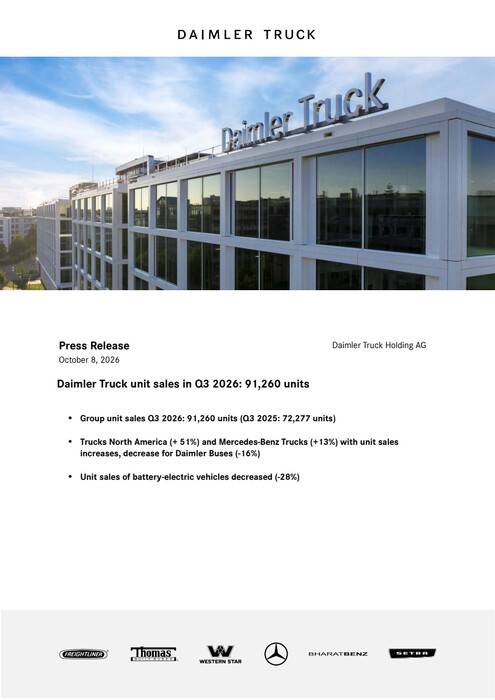
Diesel trucks drive Daimler Truck's 51 per cent North American sales surge in Q3

Why it matters: diesel truck demand in North America jumped sharply in the September quarter even as the group's electric truck sales shrank further, a sign fleets are buying combustion hard ahead of tighter 2027 emissions rules.

Daimler Truck's North American division sold 45,629 trucks in the third quarter of 2026, up 51 per cent on the same quarter last year. Group-wide sales rose 26 per cent to 91,260 units. Nearly all of that growth was diesel and other combustion trucks: battery-electric sales across the whole group, trucks and buses combined, fell 28 per cent year on year to just 1,207 units, a sliver of total volume. Mercedes-Benz Trucks sales rose 13 per cent to 40,362 units, while Daimler Buses sales fell 16 per cent. Full Q3 financial results follow on 6 November.

Source: Daimler Truck AG newsroom, 8 October 2026, corroborated by Transport Topics and Teleborsa.
Image: Daimler Truck AG
MAN mining tipper

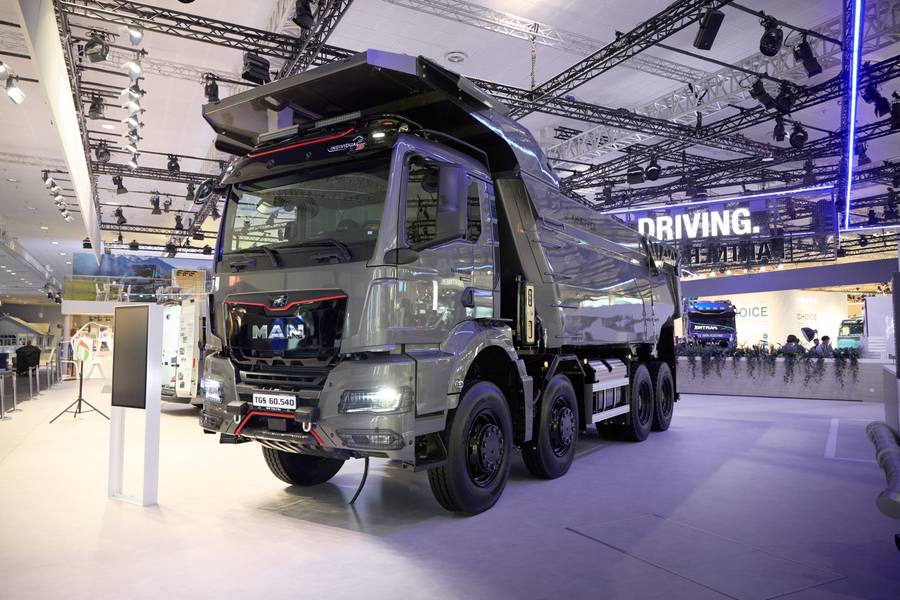
MAN rolls out 60-tonne mining tipper for Chile, Morocco and beyond

Why it matters: MAN is scaling up its heavy-mining truck range specifically for thin-but-growing markets in Latin America, Africa and the Middle East, where roughly 135,000 mining trucks already run around the clock.

MAN Truck and Bus has unveiled a new 60-tonne mining tipper, the TGS 60.540 8x4 BB, building on the 50-tonne model it launched in 2023. The truck carries around 40 tonnes of payload and is powered by MAN's 12.4-litre D2676 diesel engine, putting out 540hp and 2650Nm of torque through a TipMatic 12.28 automated gearbox with an off-road driving mode. Euro 6 left-hand-drive versions arrive first in Chile and Morocco, with Euro 2 to Euro 5 variants following for wider use across Africa, the Middle East and Latin America.

Source: MAN Truck & Bus SE official press release, 8 October 2026, cross-checked with Commercial Motor.
Image: MAN Truck & Bus SE
Valtra T Series tractor

Valtra launches 6th-generation T Series tractor, orders open 1 October

Why it matters: a full redesign of Valtra's mainline row-crop/utility tractor for European, Middle Eastern and broader markets, with orders opening the same day as the announcement.

AGCO's Valtra brand unveiled the sixth-generation T Series on 1 October, calling it a complete redesign built around a new SmartTouch Gen2 interface, automated ground-speed hydraulics and factory-fitted PTx FarmENGAGE connectivity. Power comes from AGCO Power's CORE75 7.5-litre six-cylinder diesel, spanning 170 to 245hp with up to 1,184Nm of torque on the flagship T236. AGCO claims a 5 per cent fuel efficiency gain over the outgoing model in lab testing. Buyers get a choice of the existing ML 180 CVT or a new 10-step powershift gearbox, with transport speeds up to 57km/h. Orders opened the day of the announcement, with deliveries promised by year-end.

Source: AGCO/Valtra press release via PR Newswire UK, 1 October 2026.
Image: Valtra (AGCO) Finland
Continental truck tyre

Continental launches Generation 5 regional-haul truck tyres

Why it matters: a top-three global tyre maker refreshing its regional-haul line with double-digit mileage claims matters to cost-squeezed fleets watching every input price, tyres included.

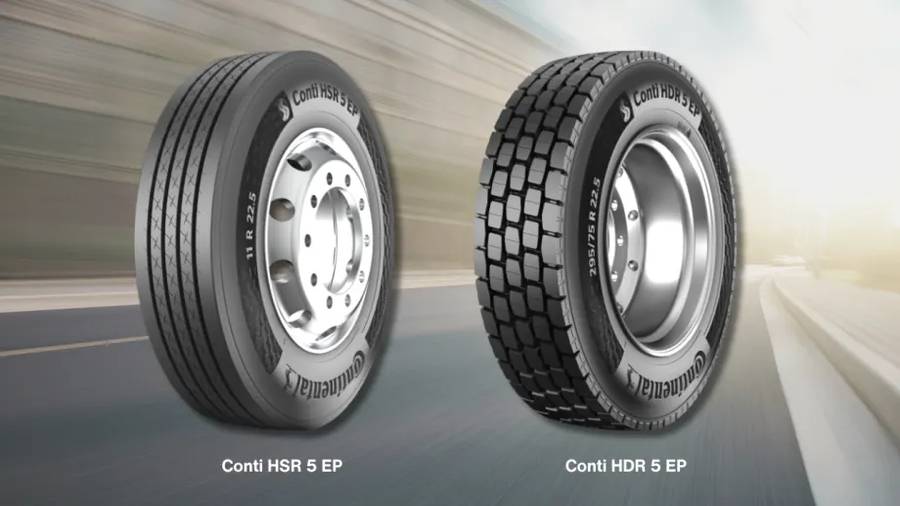
Continental has launched two new regional-haul truck tyres, the Conti HSR 5 EP steer tyre and Conti HDR 5 EP drive tyre, aimed at fleets running frequent stop-start routes through urban and suburban areas. The steer tyre uses a five-rib tread designed for even wear and low rolling resistance, with Continental claiming a 22 per cent mileage gain over the outgoing model. The drive tyre gets an open-shoulder tread with added stone-trap and cut-and-chip protection, and a claimed 19 per cent improvement in removal mileage. Both tyres went on sale in October 2026, with more sizes due through 2027.

Source: Heavy Duty Trucking (HDT), 2 October 2026.
Image: Continental Germany (via HDT)

Dangote diesel price swings sharply as crude wobbles, squeezing Nigerian fleets

Why it matters: Nigeria's biggest refinery is now the reference price for diesel across West Africa's road transport sector.

Dangote Petroleum Refinery cut its diesel gantry price by 80 naira a litre on 7 October, taking it to 1,700 naira, only to reverse course three days later and lift it by 100 naira to 1,800 naira. The whiplash tracked crude: Brent dipped toward 98 US dollars a barrel before climbing back past 100, while West Texas Intermediate swung either side of 90 dollars. Depot operators such as Pivot and African Terminal were already selling nearer 1,905 naira, with Abuja retail prices running 1,960 to 1,980 naira a litre. For truckers and farmers who'd welcomed the brief relief, the reversal is a reminder that Nigeria's diesel market now moves on global crude headlines almost in real time.

Source: Naija News, 10 October 2026, cross-checked against CED Magazine, 7 October 2026.
Photo: none sourced.
← Back to the Diesel Industry News homepage
Desk 4 · Marine, Rail, Defence & Power
Namibia hydrogen diesel locomotive

Namibia's hydrogen-diesel locomotive engine fires up for the first time

Why it matters: direct progress on a standing watch-list item: the dual-fuel engine has now run, and the whole rig is on track for its early-November move onto Namibia's own railway.

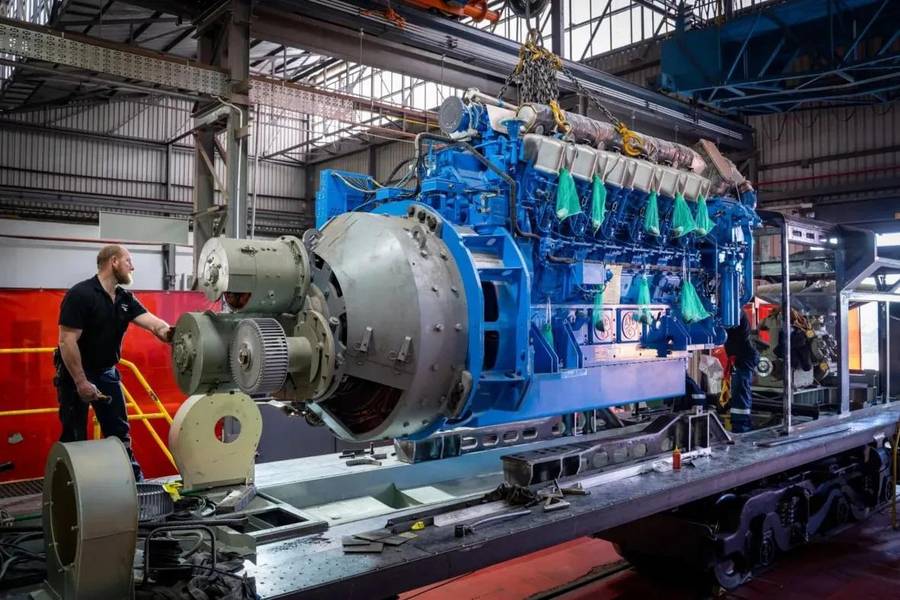
Belgium's CMB.Tech has run the first start-up of its BeHydro dual-fuel engine on a TransNamib locomotive being converted at Traxtion Rail's Rosslyn facility in South Africa. The 1.6 MW engine idled for 30 minutes while technicians checked starting, fuel, oil and coolant systems. In BeHydro's combustion cycle, hydrogen is injected on the intake stroke and a small diesel pilot charge ignites the mixture under compression, a design CMB.Tech says cuts emissions by 60 to 90 per cent against straight diesel. The hydrogen storage container has now passed factory acceptance testing, with the rig being readied to move to Namibia in early November for the next testing phase, running the 414km Walvis Bay to Windhoek corridor.

Source: RollingStockWorld, corroborated by Railways Africa NewsXpress, 28-30 September 2026.
Image: CMB.Tech
Japan Taigei-class submarine

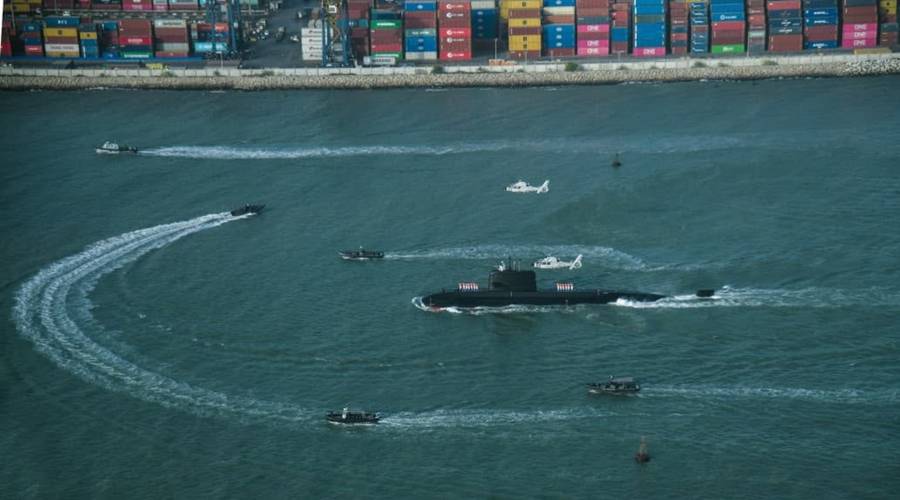
Japan launches seventh Taigei-class diesel-electric submarine Shogei

Why it matters: it's the latest addition to Japan's frontline conventional submarine fleet at a moment when Tokyo is openly debating whether to move to nuclear propulsion to keep pace with China's navy.

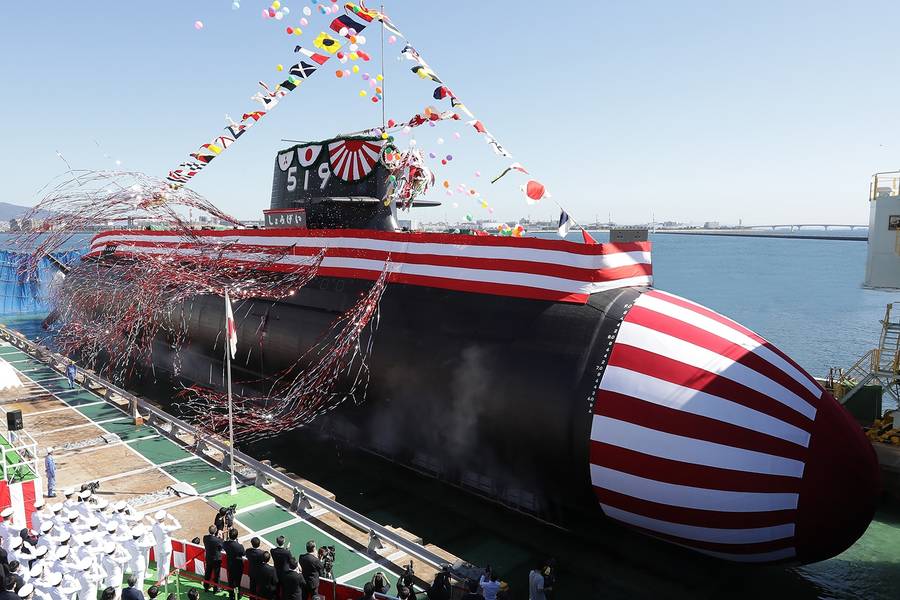
Mitsubishi Heavy Industries has launched Shogei, the seventh Taigei-class submarine, at a naming and launching ceremony at its Kobe shipyard. The 3000-tonne boat is 84 metres long with a 9.1-metre beam and carries pennant number SS-519. Like its three immediate predecessors, it uses new higher-output Kawasaki 12V 25/31 diesel engines paired with large lithium-ion battery banks for underwater endurance. Shogei cost about 80.5 billion yen (roughly 509 million US dollars) to build and is due to be handed to the Japan Maritime Self-Defense Force in March 2028. It can fire the Harpoon Block II anti-ship missile as well as Japan's newest Type 18 torpedo.

Source: Naval News (Kosuke Takahashi), 8 October 2026.
Image: Mitsubishi Heavy Industries (via Naval News)
US Army locomotive

US Army fields new diesel-electric switcher locomotives to shrink its ageing rail fleet

Why it matters: more than a third of the Army's active rail fleet is past its 65-year design life, and these low-emission diesel-electric switchers are the replacement plan in action.

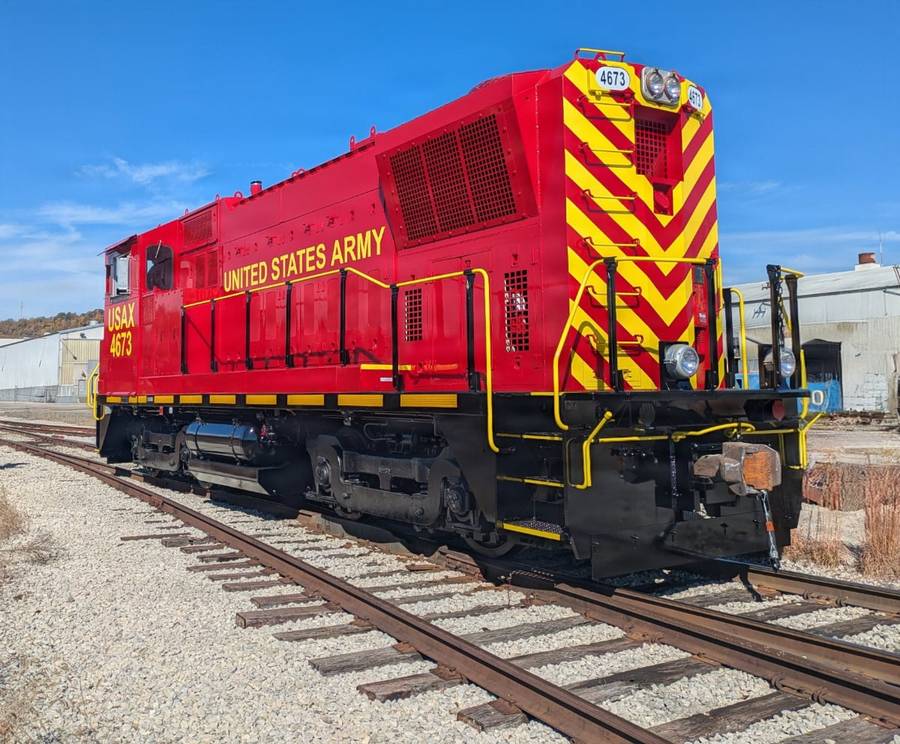
The US Army's TACOM command says it has fielded two new locomotives and a track-maintenance machine at three depots since October last year, part of a push to get the ageing rail fleet below 20 per cent "over-life" units. A 120-ton locomotive built by Knoxville Locomotive Works went into service at Crane Army Ammunition Activity in Indiana for US$2.9 million. An 80-ton switcher from SpecSys, matching the footprint of the old GE 80-ton design, went into Blue Grass Army Depot in Kentucky for US$2.1 million. TACOM's Bryan VanGheluwe says Army Rail underpins deployment and power projection for the whole force.

Source: Defence Blog, 9 October 2026, citing US Department of Transportation/TACOM figures.
Image: US Department of Transportation
Turn Services tug

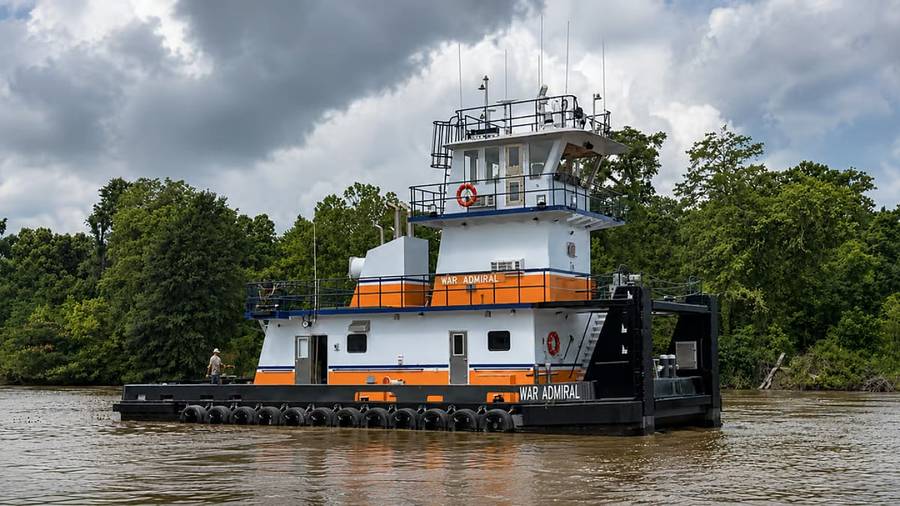
New Orleans firm Turn Services takes delivery of first two of eight Mitsubishi-diesel pusher tugs

Why it matters: a fresh US inland fleet renewal shows Tier III Mitsubishi diesels still winning river-tug orders on the Mississippi, a vote of confidence in conventional diesel propulsion for working boats.

Turn Services, a New Orleans marine transport company, has taken delivery of Sir Barton and War Admiral, the first two of an eight-boat series of inland pusher tugs built by Verret Shipyard in Plaquemine, Louisiana. Each twin-screw tug runs on a pair of Mitsubishi S6R2-series diesels, EPA Tier III-rated at 803hp (600kW) each for a combined 1,600hp (1,200kW), through Reintjes WF 570 reduction gears. The 65ft by 26ft boats will handle barge and ship-assist work on the Lower Mississippi River and Gulf Intracoastal Waterway. The remaining six boats in the series arrive through 2026 and into 2027.

Source: Baird Maritime (Work Boat World), published 8 October 2026.
Image: Laborde Products
Pakistan Hangor-class submarine

Pakistan's first Hangor-class submarine fires an anti-ship missile

Why it matters: first operational proof that Pakistan's new Chinese-built diesel-electric submarine fleet can fight, a real shift in the naval balance across the North Arabian Sea and Indian Ocean.

Pakistan Navy's first Hangor-class submarine has completed its maiden live-fire test in the North Arabian Sea, launching an anti-ship cruise missile from its torpedo tubes. The Hangor class is built by China's Wuchang Shipbuilding Industry Group under an export licence deal covering eight boats, based on China's Type 039B/Yuan-class design. The 76-metre submarine runs four CHD620 diesel engines paired with air-independent propulsion, giving it submerged endurance of up to three weeks and a range of roughly 10,000 nautical miles. Pakistan is inducting all eight Hangor-class boats to replace its ageing Agosta-90B fleet, part of a broader naval modernisation drive racing India's own submarine expansion.

Source: Naval News, corroborated by The Defense Post, 28-30 September 2026.
Image: Pakistan Navy
← Back to the Diesel Industry News homepage
Desk 5 · Technology, Fuels & the Future
DEUTZ Hypercraft robot

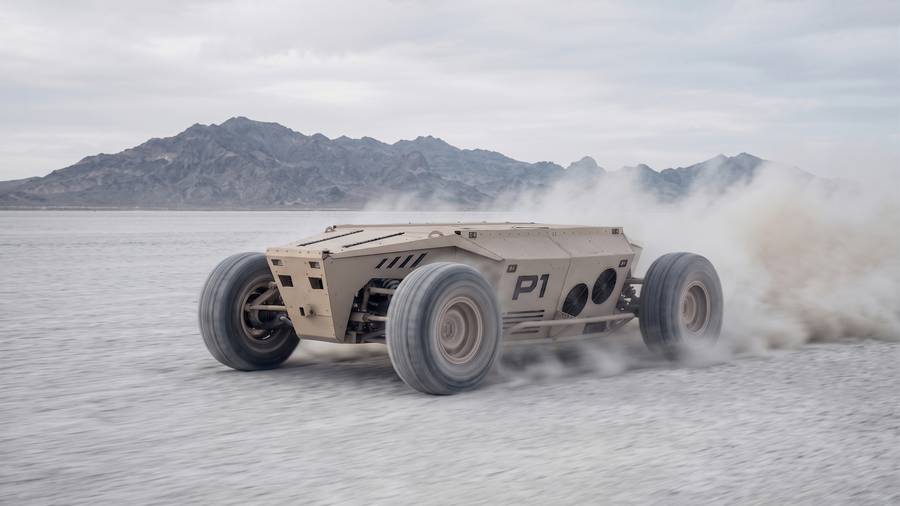
DEUTZ signs MOU with Hypercraft to build a diesel-hybrid combat robot

Why it matters: a watch-list item just moved from rumour to a formal, company-issued deal, and it's a rare case of a traditional diesel engine maker putting its hybrid tech into a battlefield robot rather than a truck or ute.

German engine maker DEUTZ AG and US firm Hypercraft have signed a memorandum of understanding to jointly develop Hypercraft's Razorback unmanned ground vehicle. DEUTZ's NewTech division will evaluate its hybrid drivetrain, battery and power electronics for the two-tonne robot, which runs a diesel-hybrid drive producing up to 95kW, a 42kWh battery, a top speed near 100km/h and up to 450km range. No production contract or timeline has been set yet, this is still an MOU stage.

Source: DEUTZ AG, 21 September 2026.
Image: DEUTZ AG Germany
Bayer Neste canola feedstock

Bayer and Neste sign deal to scale winter canola as HVO/SAF feedstock

Why it matters: feedstock supply is the bottleneck behind HVO/renewable diesel growth. A seed-to-refinery tie-up between a major agri-genetics firm and the world's biggest HVO producer is a leading indicator of where renewable diesel volumes come from next.

Bayer and Neste have finalised a commercial agreement to expand Bayer's newgold winter canola as a dedicated feedstock crop across the US Southern Great Plains. The oilseed will feed renewable diesel and sustainable aviation fuel production, with the high-protein meal by-product going into animal feed. Bayer plans to launch newgold hybrid varieties, bred for winter-hardiness, herbicide tolerance and pod-shatter resistance, from 2027.

Source: Bayer, 9 September 2026, corroborated by Hydrocarbon Processing.
Image: Bayer US

MIT spin-out unveils reactor that lets existing diesel trucks run on hydrogen

Why it matters: it's a retrofit path for hydrogen in heavy diesel transport that sidesteps the infrastructure problems that have stalled hydrogen trucking elsewhere.

Boston startup LNK Energies, spun out of MIT, says it can convert existing heavy-duty diesel trucks to run on hydrogen without the expensive high-pressure storage tanks hydrogen trucks usually need. The system stores hydrogen chemically in a liquid carrier that can be pumped like diesel, then releases it on demand through a reactor the company says is roughly the size of a mini-fridge. The released hydrogen can burn in a modified combustion engine or feed fuel cells. Co-founders Sayandeep Biswas and Alexis Huynh say a converted Class 8 truck could undercut diesel on total cost of ownership even without government subsidies, though that claim hasn't been independently verified. The company has a lab-scale demonstrator and plans a commercial truck installation within 18 months, pitched at TechCrunch Disrupt this week.

Source: TechCrunch, 13 October 2026.
Photo: none sourced.
Feature · Opinion

The diesel paradox: everyone wants to quit it, nobody actually can

A week of emergency oil releases, a Trump-Putin diesel deal and Australia knocking back Russian fuel forced a question worth asking straight: is diesel actually going anywhere, or is the real fight about making it cleaner?

This week alone, the G7 agreed to release 100 million barrels of emergency diesel stock. Trump struck a deal with Putin to get Russian diesel flowing again, weeks after signing sanctions against Russian energy revenue. Australia's energy minister went on television to say, bluntly, that Australia doesn't want any of it. And an old warning about diesel rationing and $4-a-litre pump prices did the rounds online again this week, dragged back out like it was breaking news, when it's actually three weeks old and its own premise has since fallen over.

Treat diesel as a dirty word in public and this is what you get: a fuel everyone claims to be moving past, propping up the global economy hard enough that governments are trading barrels like it's an oil shock.

The honest version of that story isn't "diesel's on the way out." It's that nobody's found a way to get rid of it, and the industry that could explain why keeps getting drowned out by transition talk.

Start with the numbers. The world burns through roughly 28 million barrels of diesel a day, more than any other refined fuel, ahead of petrol. Set against that, the stuff being sold as diesel's green replacement barely registers. Synthetic e-diesel, made from renewable power, water and captured carbon, exists almost nowhere at real scale. Nearly every dollar chasing that technology right now is going into aviation fuel mandates, not diesel, and Europe's own tracked pipeline of e-fuel projects has seen about 40 per cent of them abandoned or stalled before they got built.

Renewable diesel, known as HVO, made from waste cooking oil and animal fat, is the one genuine success story, and it's real: companies like Neste and Eni are producing it at serious volume, mostly for Europe and the US. But it's capped by how much used oil and tallow the world can actually collect, and once that runs short, topping it up with virgin crop oil drags the whole climate case back down. Here's the bit worth saying plainly: HVO isn't zero-carbon, it's lower-carbon, typically a 50 to 65 per cent lifecycle cut, not a clean sheet. Italy's competition regulator fined Eni five million euro in 2025 for marketing an HVO blend as "green diesel" without the numbers to back it up. Australia's own Ampol copped a greenwashing complaint over "carbon neutral fuel" claims. "Zero-carbon diesel" isn't a term with a real technical standard behind it, it's marketing, and it's already drawn regulatory blood when pushed too far.

None of that means diesel is untouchable forever. The Australian Academy of Technology and Engineering, not an industry lobby group, has mapped this properly: electrify what can genuinely be electrified, like urban freight and some mine equipment, bring hydrogen in where it makes sense, like off-grid mining and heavy ag gear, and accept that long-haul shipping, remote power and plenty of heavy machinery will be running on diesel, or something that looks a lot like it, for a good while yet. Not because anyone's attached to it, but because nothing else matches its energy density, and the infrastructure to replace it at speed doesn't exist.

That's the real story behind this week's headlines. The diesel crisis isn't a sign the fuel's dying. It's a sign the world's still entirely dependent on it, and the serious work isn't banning the word, it's cleaning up what's actually burning.

← Back to the Diesel Industry News homepage
Desk 6 · Exhibitions & Trade Fairs
Fenatran 2026

Fenatran 2026 sells out exhibition floor, adds outdoor space for late entrants

Why it matters: Latin America's biggest road-transport fair is tracking bigger than 2024, a read on fleet-renewal appetite in Brazil's truck market.

Fenatran, Latin America's largest road cargo transport show, has sold out its exhibition space at São Paulo Expo for the 9-13 November edition. Organisers freed up an extra 700 square metres of outdoor pavilion space to let 26 more companies in, and now expect more than 700 exhibiting brands, about 17 per cent up on 2024. Thirteen truck manufacturers are confirmed, a record for the show. The programme carries more than 60 hours of debate on energy transition and operational efficiency, and the Fenatran Experience test track will let visitors drive diesel, gas and electric trucks and buses from DAF, Foton, Iveco, Mercedes-Benz, Scania, Sany and Volkswagen Caminhões e Ônibus.

Source: AutoData Editora, 8 October 2026.
Image: Fenatran/RX Brazil
AM General HUMVEE

AUSA 2026 opens with new diesel heart for the HUMVEE

Why it matters: the Association of the US Army's Annual Meeting is one of the world's biggest land-defence trade fairs, and this year's diesel-power news isn't a hybrid story, it's a straight engine upgrade, a reminder that plenty of military diesel investment is still going into better combustion, not just electrification.

AUSA 2026 opened on 12 October at the Walter E. Washington Convention Center and runs through 14 October. AM General used the show to reveal the first phase of a three-part HUMVEE modernisation: a new Common Rail Direct Injection engine making 250 horsepower and more than 500 lb-ft of torque, paired with a six-speed automatic and a redesigned hood and grille to fit it. The engine runs on JP-8, F-24 or conventional diesel and will also power AM General's new unmanned ground vehicle and the HUMVEE Hawkeye artillery system. Production of phase one is slated for late 2027. Separately, Oshkosh Defense confirmed it's showing a hybrid-electric version of its Joint Light Tactical Vehicle at the same show, with no battery size or electric-only range detail given.

Source: AM General, 9 October 2026, corroborated by Soldier Systems Daily and The Defense Post.
Image: AM General, USA
EIMA International

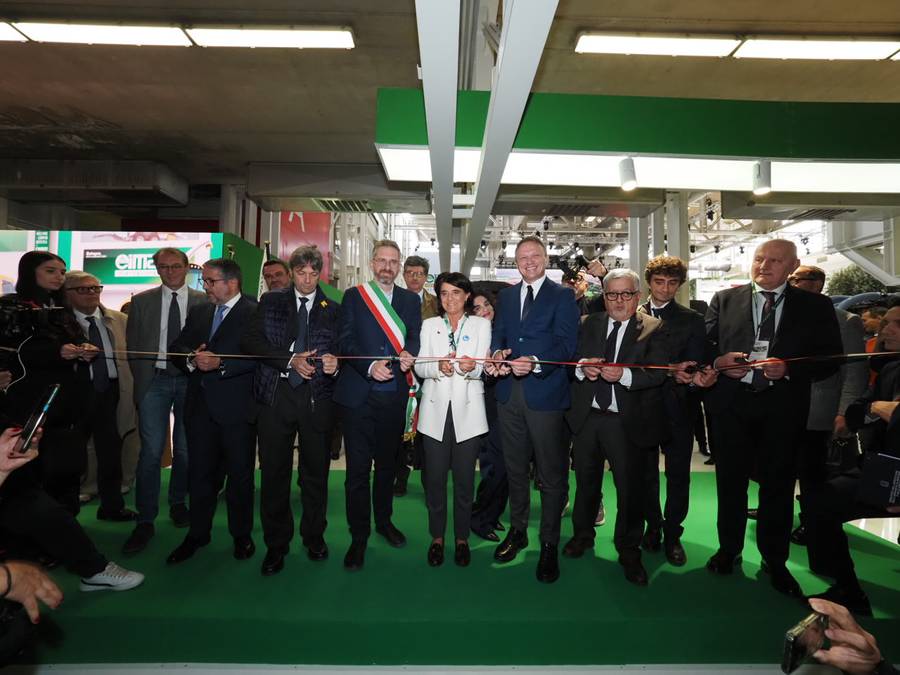
EIMA International 2026 locks in record scale ahead of November Bologna show

Why it matters: EIMA is one of the world's biggest agricultural machinery fairs, and this year's growth signals strong manufacturer confidence heading into 2027 launches.

Organiser FederUnacoma has confirmed EIMA International 2026 will run Tuesday 10 to Saturday 14 November at the Bologna Exhibition Centre, its first time opening on a Tuesday. The federation says the show has effectively sold out, with exhibitor space at capacity and more than 100 companies on a waiting list, prompting a new Hall 35 and extra temporary halls. A judging panel has named 19 "Technical Innovations" and 35 "Technical Evolution" awards, covering everything from AI-based safety systems to hybrid power units, selected across roughly 60,000 machinery models in 14 product categories.

Source: FederUnacoma press release via Global Agriculture, 2 October 2026, cross-checked against IVT International.
Image: FederUnacoma/EIMA International, Italy (official organiser photo from the fair's prior 2024 edition, since the 2026 show hasn't opened yet)
← Back to the Diesel Industry News homepage
Desk 8 · Regulation & Policy
G7 videoconference
FINAL

G7 agrees emergency diesel release as Trump drops export ban threat

Why it matters: this resolves the previously threatened US diesel export ban, a multinational response that removes, for now, the risk of a shock that would have hit import-dependent markets including Australia, Latin America and Europe.

G7 leaders held a videoconference on 2 October 2026, chaired by French President Emmanuel Macron, and agreed to release up to 100 million barrels of strategic crude and refined-product reserves, including diesel, over four months, coordinated through the International Energy Agency, with a front-loaded diesel release in the first 20 days. Member states also committed not to impose export bans or restrictions on energy products between each other. Hours later, Donald Trump told reporters the US would not impose a diesel export ban after all, reversing his September threat. US on-highway diesel had averaged $6.382 a gallon in the week to 28 September, about $2.63 higher than a year earlier.

Workshop/fleet translation: removes the near-term risk of a sudden diesel supply shock from a US export ban for fleets outside the US. The reserve release should ease, not solve, record diesel prices over coming weeks.

Source: Elysee (French Presidency), 2 October 2026, corroborated by CBS News, Al Jazeera, AP and Politico.
Image: Presidence de la Republique, Elysee.fr
US Treasury OFAC seal
FINAL

Treasury carves sanctions licence for Russian diesel after Trump-Putin call

Why it matters: if actual cargoes follow, more diesel supply hitting the global market should take some heat off the price spikes fleets have been wearing since the Russia export squeeze began. Don't bank on it at the bowser yet, nobody's confirmed a single tanker has sailed.

After a phone call with Vladimir Putin on 9 October, Trump posted on Truth Social that Russia would "immediately" release more than 300,000 tons of diesel into US and global markets, with up to 3 million tons more to follow depending on refinery conditions. Hours later, Treasury's Office of Foreign Assets Control issued General License 135, authorising the sale, delivery, offloading and importation of Russian-origin diesel, good until 7 April 2027. The catch: a 2022 law bans Russian oil imports outright, and legal analysts say a general licence doesn't clearly override that statute. No purchase or shipment has been confirmed yet. US diesel had averaged $6.28 a gallon before the announcement; futures fell more than 4.8 per cent afterward to $4.64 a gallon, though analysts were sceptical it's a lasting fix, calling the volume modest against a genuinely tight market.

Source: US Department of the Treasury, OFAC, General License 135, 9 October 2026, cross-checked against NBC News, CNBC and ABC News.
Image: US Department of the Treasury (official seal, OFAC site)
PROPOSED / PENDING

Egypt's year-long diesel price freeze hits its October deadline with no decision yet

Why it matters: Cairo promised diesel would stay frozen "at least until October 2026." That month has arrived, the pricing committee still hasn't met, and trade sources are already pricing in a 10-15 per cent rise once it does, with no warning for hauliers or generator operators when it lands.

Egypt's diesel has sat at 20.50 EGP a litre since the last official adjustment, under a freeze the petroleum ministry said would hold "until October 2026 at least." As of 9 October, the Automatic Fuel Pricing Committee still hadn't scheduled its review, and the ministry publicly denied social-media rumours of an imminent hike, insisting current prices remain in force. But Hassan Nasr, head of the General Petroleum Materials Division at the Federation of Egyptian Chambers of Commerce, told local press he expects a 10-15 per cent increase once the committee finally convenes. For a Cairo delivery fleet or a construction-site generator operator, that's the gap between budgeting at 20.50 EGP a litre and planning for something closer to 23: no change yet, but the promised cushion is expiring with nothing to replace it.

Source: Banker (Egypt), 9 October 2026, corroborated by Al Khaleej (UAE).
Photo: none sourced.
The White House
FINAL (signed 5 October 2026, temporary through 31 December 2026)

Trump executive order lets US truckers run tax-free red-dyed diesel on highways through year's end

Why it matters: it's a direct, if temporary, federal intervention into how diesel is taxed and policed at the pump.

Workshop/fleet translation: off-road dyed diesel can now run on-highway without the federal highway tax collected immediately, but the tax is deferred, not cancelled, so keep paperwork clean in case it's clawed back.

The White House says the order will save truckers "over 100 dollars per refill" by deferring the federal highway tax on dyed diesel through the end of 2026. Treasury is directed to pause enforcement and explore scrapping the deferred liability altogether. States aren't bound: Texas suspended its own on-road restriction by proclamation (its 20 cent state tax still applies), while California says its on-road ban on dyed diesel stands unchanged.

Source: White House Fact Sheet, 5 October 2026.
Image: The White House, USA (generic share card, no signing photo exists)
Watch List
← Back to the Diesel Industry News homepage
Enjoying the paper? Get every edition free by email, straight from the newsroom. Subscribe here.