Mack Defense wheels out a hybrid-electric tactical tractor at AUSA, eyes "silent watch" for frontline logistics
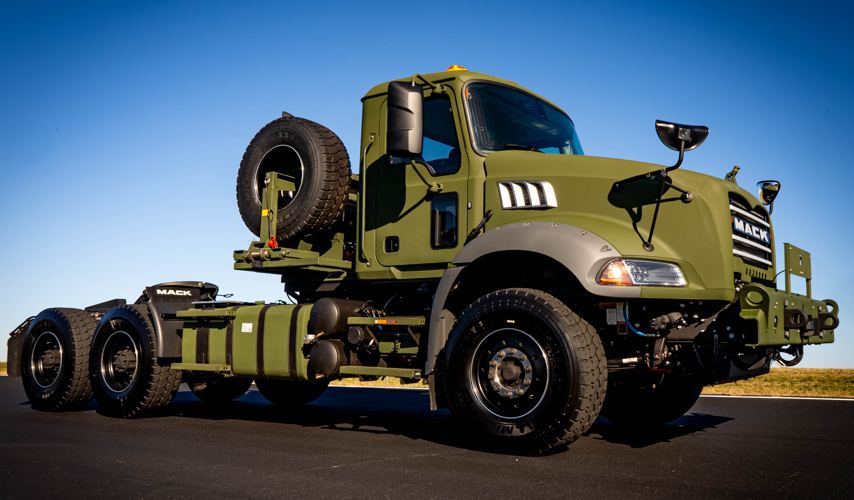
Mack Defense had a hybrid-electric line-haul tractor on the floor at the AUSA 2026 Annual Meeting in Washington DC this month, and it is the clearest sign yet that diesel-hybrid drivetrains are moving off the drawing board and onto real hardware.
The truck is built on the commercial Mack Granite chassis in 6x4 configuration, one of three prototypes made for the US Army's Common Tactical Truck programme, which is meant to replace the ageing M915 line-haul tractor. The pitch is a high-voltage hybrid-electric system that cuts fuel burn and lets the truck run its electronics, sensors and comms gear for extended periods without the engine idling, something the Army calls "silent watch." It can also export power to the field for other equipment. Mack hasn't released battery size, motor output, electric-only range, or named the base diesel engine, so we can't yet rate this one against our usual MHEV, HEV or PHEV tiers, which are built for civilian utes and vans, not bespoke military trucks.
Why it matters: genuine hybrid-electric diesel work trucks are rare to see in the metal rather than in a press release. This one is real, it was on the show floor, and it points at where heavy military logistics is heading.
Primary source: Mack Defense press release, 28 September 2026, vehicle shown at AUSA 2026, 12 to 14 October. Hybrid level: not rated against civilian taxonomy, bespoke military system, base fuel diesel per the Mack Granite platform.
GWM opens pre-orders on a new 620Nm turbo-diesel for the Tank 500 and Cannon Alpha, and says the engine is built to support hybrid and plug-in hybrid diesel variants down the track. Full story on Desk 5.
Isuzu Ute Australia has set up a dedicated powertrain team to work out what replaces diesel, and still won't say whether a future plug-in hybrid runs on diesel or petrol. Full story on Desk 1.
New Zealand diesel prices are up almost 56 per cent on a year ago, Stats NZ says, even as the government locks in a diesel reserve through to 2027. Full story on Desk 1.
A Dutch inland tanker, the Felicitas, has been christened running diesel-electric for now but built "methanol-ready" for a fuel switch later. Full story on Desk 4.
Isuzu Ute Australia rules out electric D-Max, sets up a dedicated powertrain team
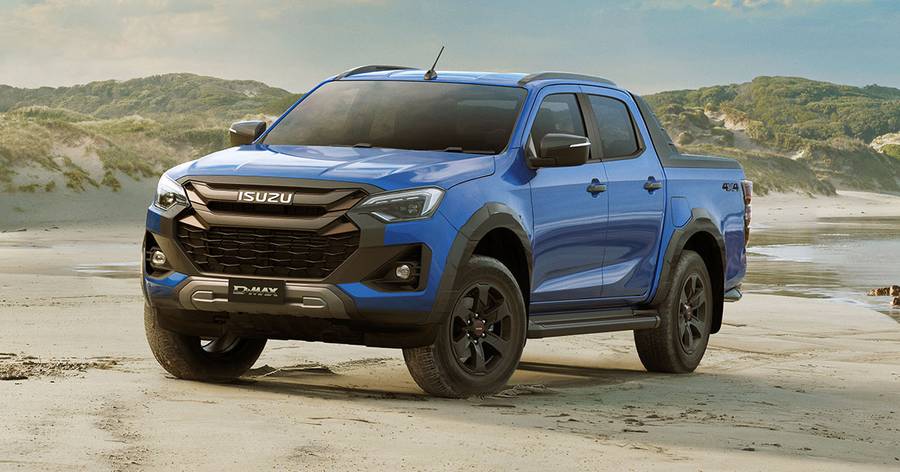
Isuzu Ute Australia has knocked back a battery-electric D-Max again, but it isn't sitting still on the next powertrain either. Executive general manager Rod Caldwell told Drive the company has put together a dedicated team to work out what comes after diesel, feeding into parent company Isuzu's "Earth Lab" research programme in Japan. Caldwell said going electric just to tick the New Vehicle Efficiency Standard box "isn't going to create the result that we're looking for," and that customers don't want a one-tonne electric ute yet. He wouldn't rule out a plug-in hybrid down the track, but said Isuzu hasn't decided whether it would run on petrol or diesel. For now the plan stays simple: a new, more efficient 2.2-litre turbo-diesel carries the compliance load.
Why it matters: Isuzu is Australia's best-selling diesel ute maker, and it's the first to say plainly that a future PHEV could still run on diesel. We'll be chasing this one hard.
Primary source: Drive, "Isuzu D-Max EV ute isn't the answer now, but green tech is coming," Tung Nguyen, 19 October 2026. Hybrid level: undecided, high-priority watch item.
New Zealand extends its 550,000-barrel diesel reserve to August 2027
The New Zealand government has extended its deal with Z Energy to keep a 550,000 barrel strategic diesel reserve in place until 1 August 2027. The diesel sits in refurbished tanks at Marsden Point in Northland, holding around 90 million litres, enough to cover roughly nine days of the country's typical diesel use. Finance Minister Nicola Willis and Associate Energy Minister Shane Jones announced the extension, saying fuel security remains a priority given ongoing global supply risk. Z Energy keeps ownership and day to day management of the stock, while the Crown controls when it gets released into the market. The arrangement builds on the $21.6 million tank refurbishment funded through the Regional Infrastructure Fund earlier this year.
Why it matters: first hard update on NZ's strategic diesel buffer since it went live in July, and a sign the government still rates diesel security a live risk.
Primary source: New Zealand Government (Beehive.govt.nz), "Diesel reserve extended to maintain fuel security," 14 October 2026.
NZ diesel prices up almost 56 per cent year on year
New Zealand diesel prices rose 7.8 per cent in September from August, outpacing a 6.4 per cent rise in petrol, according to Stats NZ. Over the year to September, diesel is up 55.8 per cent against petrol's 24.3 per cent. Prices spiked hard in March and April after supply disruptions that started in late February, eased through winter, then climbed again from August. Stats NZ prices spokesperson Nicola Growden said September's level sits above March's peak but still below April's high point. For a country that just extended its 550,000-barrel diesel reserve at Marsden Point, the numbers show the underlying price pressure hasn't gone away.
Primary source: Autofile, "Prices at pump climbing" (citing Stats NZ), 19 October 2026.
Nissan axes the diesel Navara Warrior to fast-track a Chinese-built petrol PHEV ute
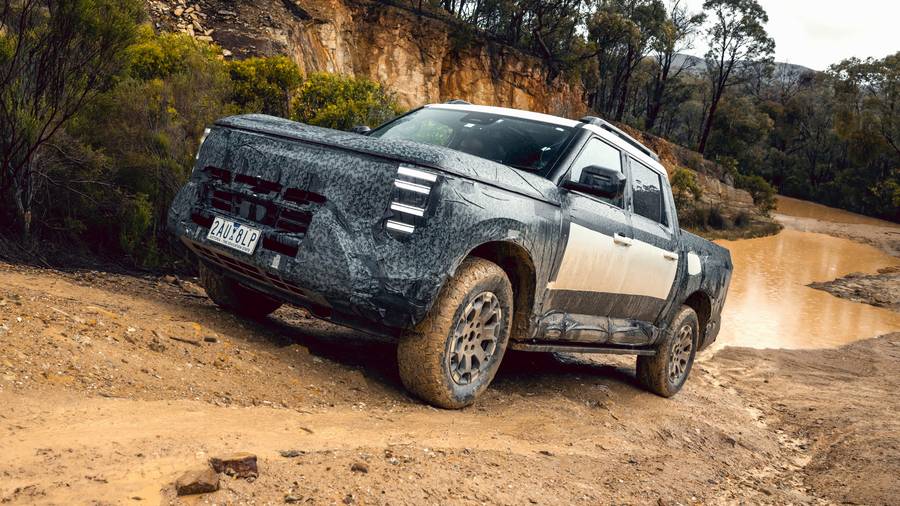
Nissan Australia has canned development of the next-generation D27 Navara Warrior, the tough diesel variant it was building with local engineering house Premcar, so it can get the new Navara Pro plug-in hybrid to market sooner. Nissan Australia boss Steve Milette said the two programmes were competing for the same resources and the PHEV won: "we've elected not to proceed with that program." Navara sales have fallen 48 per cent this year. The Navara Pro, confirmed for Australia in 2027, is a Chinese-sourced PHEV dual-cab aimed at the BYD Shark 6, running a 2.0-litre turbo-petrol engine paired with an electric motor, 300kW and 800Nm combined on preliminary figures. Milette left the door open to a future Warrior variant of the new ute, saying "it's possible."
Note for readers: the Navara Pro is a plug-in hybrid, but it runs on petrol, not diesel, so it does not count toward our diesel-hybrid tally.
Primary source: Nissan Australia newsroom, 8 October 2026; carsales.com.au, 12 October 2026.
Volvo unveils the all-new VNX heavy-haul truck, diesel only, no hybrid option
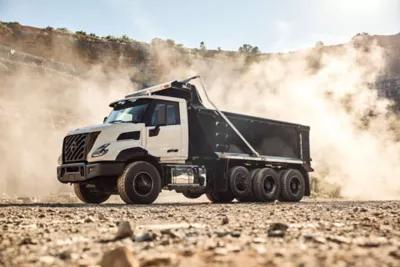
Volvo Trucks North America has unveiled the all-new VNX, its vocational and heavy-haul truck aimed at construction, concrete, logging, agriculture and municipal plough work. Power comes from the Volvo D13 diesel, rated up to 540hp and 1,950lb-ft of torque, with an engine brake up to 630 braking hp. It's certified to EPA 2027 standards in all 50 US states. The truck comes in three configurations on a heat-treated steel frame rated to 160,000lb GVW. New safety kit includes forward pedestrian detection and a "Remote Steer" feature letting the driver walk the truck from outside the cab at low speed. Sales open 26 October 2026. President Peter Voorhoeve called it "the toughest, safest, most connected and most powerful vocational truck we have ever built."
Why it matters: third all-new Volvo truck platform in North America in under three years, and it's pure diesel top to bottom, a reminder diesel still owns the heavy vocational and haul segment.
Primary source: Volvo Group newsroom, 14 October 2026.
AM General reveals next-gen Humvee with a new 6.5-litre diesel heart
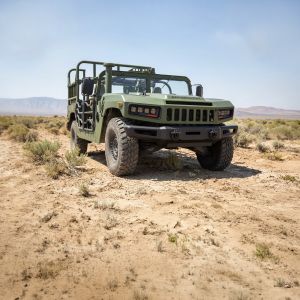
AM General used the AUSA Annual Meeting in Washington this month to show off the first phase of a long-promised Humvee overhaul. The headline act is a new 6.5 litre common rail diesel making 250 horsepower and more than 500lb-ft of torque, bolted to a six-speed Allison automatic with wide-ratio gearing. There's a reworked hood and grille to fit the bigger engine, plus a long-travel suspension aimed at rough terrain and higher payloads. AM General says the same powerpack will end up in its new unmanned ground vehicle and in the Humvee-based Hawkeye 105mm mobile artillery rig. Full production isn't pencilled in until late 2027.
Why it matters: first real powertrain overhaul for the Humvee platform in decades, touching three vehicle lines. AM General's own release avoids the word "diesel" for multi-fuel marketing reasons, but Army Recognition confirms it explicitly.
Primary source: AM General press release, 9 October 2026; Army Recognition, 12 October 2026.
HD Hyundai launches a third diesel-powered patrol vessel for the Philippine Navy
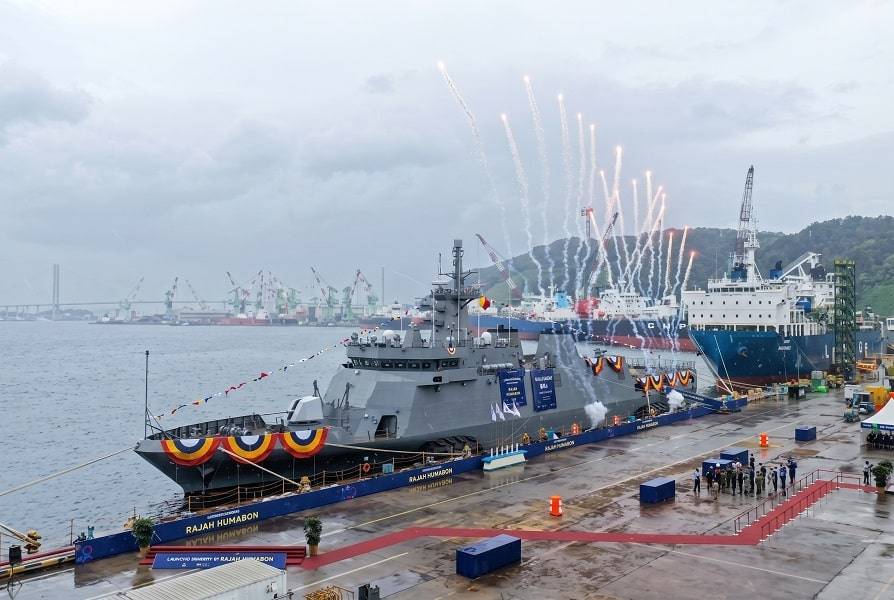
HD Hyundai Heavy Industries launched the BRP Rajah Humabon at its Ulsan shipyard on 13 October, the third of six 2,400-tonne offshore patrol vessels on order for the Philippine Navy under the Rajah Sulayman class. The ship is 94 metres long, has a 5,500 nautical mile range, a 15-knot cruising speed, and carries a 76mm main gun plus two 30mm secondary guns, decoy launchers and electro-optical tracking gear. HD HHI's Won-ho Joo said the launch reflects the company becoming "a steadfast partner in the modernization of the Philippine Navy." Delivery is scheduled for February 2027, with the remaining three hulls following through 2028. Propulsion is CODAD, two Hyundai HiMSEN 18H25/33V diesel engines.
Primary source: Naval News, 14 October 2026, corroborated by Baird Maritime.
Daimler Truck Defence lands an order for 61 Unimogs from New Zealand
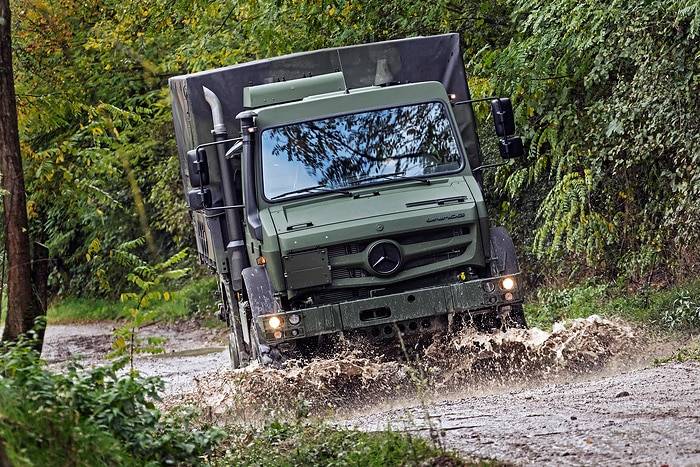
Daimler Truck Defence has picked up an order for 61 Mercedes-Benz Unimog vehicles from the New Zealand Ministry of Defence and the NZDF, part of a wider fleet renewal programme. The Unimogs will handle training runs, moving people and gear between military sites, search and rescue work, and domestic disaster relief. Phased delivery starts in 2027. Daniel Zittel, Chief Sales Officer at Daimler Truck Defence, called it a strong vote of confidence in the vehicle's capability. NZDF already runs older Unimogs, so this is effectively a repeat order. All diesel, running Daimler's OM924 LA and OM934 engines.
Primary source: Daimler Truck newsroom, 15 October 2026.
India commissions INS Samarthak, first warship-class vessel built by a private Indian shipyard

Vice-President C P Radhakrishnan commissioned INS Samarthak into the Indian Navy on 16 October at INS Kadamba, Karwar. Larsen & Toubro built the 107 metre, 3,750 tonne ship at its Kattupalli yard near Chennai, the first vessel of this size delivered by a private Indian shipyard. Samarthak runs a CODAD arrangement with two Cummins QSK95 diesel engines, top speed 15 knots, range 4,500 nautical miles. It was built as a trial platform for new weapons, radars and sensors, can act as a mothership for unmanned systems, and can run humanitarian relief missions. Crew is around 116, with over 75 per cent Indian-made content. A sister ship, Utkarsh, is due to follow.
Primary source: News on Air (All India Radio, Government of India), 16 October 2026, corroborated by Baird Maritime and Swarajya Mag.
Dutch inland tanker Felicitas christened, methanol-ready but running diesel-electric for now
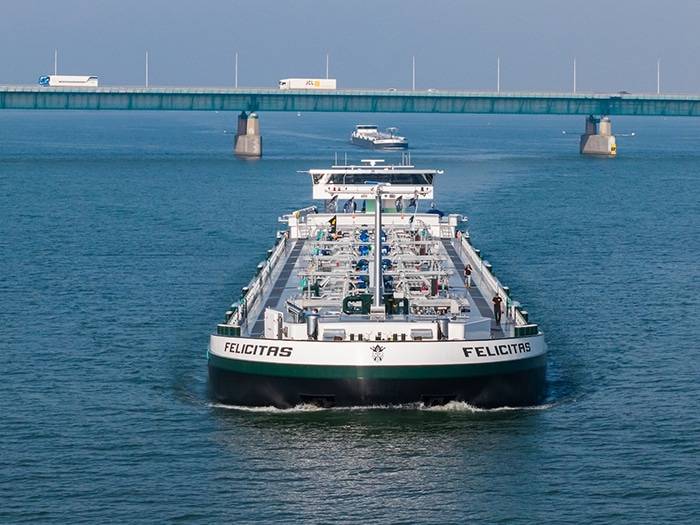
Dutch operator AMS Barging has christened its newest inland tanker, Felicitas, at Noordereiland in Rotterdam. The 135-metre vessel runs a diesel-electric system driving Z-drive propulsion units, meets EU Stage V emissions limits, and carries about 9,000 cubic metres of cargo across 12 tanks. The twist is the "methanol-ready" tag: the hull and systems are designed so AMS Barging can convert to methanol bunkering later, without committing now. She's already done her first commercial run on the European spot market.
Why it matters: a real-world example of inland shipping hedging its fuel bets, diesel-electric now with the door left open to methanol later.
Primary source: Marine Log, 18 October 2026.
Stellantis's diesel-hybrid van engine gets firmer detail: a 2.2 litre Multijet with 48V assist, built from 2029
Reuters reported on 15 October that Stellantis is testing a new diesel-hybrid powertrain for its large European vans, the Fiat Ducato, Peugeot Boxer and Citroen Jumper, built at the Atessa plant in Italy. A Stellantis spokesperson confirmed to Reuters the powertrain is "still in a testing phase, with no timeframe yet established for its market launch." The Italian metalworkers' union FISMIC has since gone further, announcing a 2.2-litre Multijet diesel paired with 48V mild-hybrid assistance, to be built at Stellantis's Pratola Serra plant near Avellino from 2029, powering Ducato-platform vehicles assembled at Atessa and at Gliwice in Poland. That detail is corroborated independently by two Italian industry outlets, hdmotori.it and marklines.com, but it is still union and trade-press sourced, not a direct Stellantis company statement. A date discrepancy remains unresolved: one Italian outlet, Motori Magazine, separately cites 2028 as the target for the new Ducato itself, against the 2029 figure for engine production. Stellantis has confirmed neither date.
Why it matters: this is the first fresh, on-record diesel-hybrid development we've had after a dry spell of more than four weeks, and it's now tied to a named plant and Stellantis's roughly 1 billion euro investment at Atessa.
Primary source: Reuters via Capital.com, 15 October 2026; Il Sole 24 Ore, 15 October 2026; FISMIC union detail via hdmotori.it and marklines.com, 29 and 30 September 2026. Hybrid level: MHEV, 2.2 litre Multijet diesel plus 48V, per union and trade-press sources, not yet confirmed directly by Stellantis. No safe image available this cycle, we're running this one text only rather than use an unrelated stock Ducato shot.
GWM opens pre-orders on a new 620Nm turbo-diesel, flags hybrid and PHEV diesel variants to follow
GWM has opened pre-orders for a new 3.0-litre four-cylinder turbo-diesel in the Tank 500 SUV and Cannon Alpha ute, with Australia and New Zealand getting the engine's global debut from the third quarter of 2026. It makes 170kW and 620Nm, up from the outgoing 2.4-litre's 135kW and 480Nm. GWM says the new diesel is designed to support future hybrid and plug-in hybrid diesel variants, and GWM chief technology officer Nicole Wu has given a loose timeline for those electrified diesel versions landing in China: "maybe the first quarter of 2027," with no Australian date set. The plain diesel does not replace GWM's existing petrol hybrid and PHEV Tank 500 and Cannon Alpha variants, it sits alongside them.
Note for readers: this engine is not itself a hybrid. It's the pipeline story behind GWM's real diesel-hybrid programme, badged Hi4-G, which is still tracking toward an early-2027 China launch with Australian timing unconfirmed.
Primary source: carexpert.com.au and whichcar.com.au, quoting GWM ANZ marketing boss Steve McIver, cross-checked against 4x4australia.com.au. No safe manufacturer-credited image found this cycle.
Washington lets Russian diesel back into world markets, just as US pump prices bite FINAL
On 9 October 2026, the US Treasury's OFAC issued General License 135, authorising the sale, delivery, offloading and import of Russian-origin diesel, including into the US, through to 7 April 2027. It followed a Trump-Putin agreement under which Russia said it would release more than 300,000 metric tons of diesel immediately, 500,000 more in November and a million after that. Six US senators have asked Trump to cancel the deal, arguing it breaches the 2022 Russian Oil Act. Australia publicly reaffirmed on 11 October it has "no interest" in buying Russian fuel.
Why it matters: a global diesel-supply story. If Russian diesel genuinely flows again, it eases price pressure everywhere, including here, though Russia's own volume targets are still unconfirmed.
Primary source: US Treasury OFAC General License 135, 9 October 2026, corroborated by Steptoe LLP and Clyde & Co, 13 October 2026.
India drafts BS-VII emission rules, Euro 7-style limits phased in from 2029 PROPOSED
India's road transport ministry has drafted a phased rollout of Bharat Stage VII emission norms, aligning with Europe's Euro 7 standard, in three phases: new passenger vehicles from April 2029, light commercials and pick-ups from 2030, heavy trucks and buses from April 2031, with a full transition by 2035. Passenger-vehicle gas limits mostly hold at BS-VI levels, but the minimum measured particle size drops from 23 to 10 nanometres, and heavy-duty vehicles face a 20 to 50 per cent cut in major pollutants. The draft also brings in real-world driving emission testing, independent market surveillance and new brake and tyre particulate limits. Vehicles already on the road are unaffected.
Workshop and fleet impact: anyone servicing vehicles sold into India from 2029 onward will eventually need real-world-driving-emissions diagnostic capability. Nothing changes for vehicles already on the road.
Primary source: ThePrint/PTI, PSU Watch and Deccan Chronicle, 14 October 2026; three-phase detail firmed up by Business Today, 15 October 2026. Still a draft, not gazetted.
IRS suspends federal penalties for on-road use of dyed diesel through the end of 2026 FINAL
The IRS has told fuel sellers and highway users it won't enforce federal excise tax penalties for dyed diesel sold or used on public roads anywhere in the country, retroactive to 1 October and running to 31 December 2026. It waives penalties for missed semi-monthly tax deposits and for failing to keep records proving on-road eligibility, and federal inspectors won't be checking during this window. It's a direct follow-through on President Trump's 5 October executive order opening up dyed-diesel highway use amid the US diesel price spike. The IRS stresses this is federal relief only, state fuel taxes and dyed-fuel penalties still apply in most states.
Workshop and fleet impact: dyed fuel still damages SCR and DPF systems on Tier 4 trucks, this notice doesn't change that chemistry one bit. It only lifts federal exposure for on-road use, not state exposure.
Primary source: IRS news release IR-2026-122, 14 October 2026, corroborated by CPA Practice Advisor, 15 October 2026. In effect now.
High priority: Isuzu's undecided D-Max/MU-X plug-in hybrid fuel type, diesel versus petrol, still unresolved. Chery's KP31 diesel-PHEV ute, Australian arrival targeted for the fourth quarter of 2026. GWM's Hi4-G diesel-hybrid programme, still tracking an early-2027 China launch, Australian timing unconfirmed. The Stellantis Ducato date discrepancy, 2028 against 2029, not yet reconciled.
Also on the list: Mexico's weekly diesel-excise exemption, successor accord for 17 to 23 October not yet located. Bolivia's Santa Cruz freight-diesel standoff, still unresolved. A possible New Zealand rollback of the AEB and lane-departure mandate for hybrids and EVs, unconfirmed by the Beehive or NZTA. Perkins' Project Coeus hydrogen-hybrid engine, now in machine integration, a strong candidate for a future Desk 5 story. A Namibian hydrogen-diesel locomotive trial and a Hainan HVO and sustainable-aviation-fuel plant, both pending a confirmed launch date. Several thinner leads out of Africa, the Middle East and Latin America are being chased for next cycle as part of our push to widen coverage in those regions.