DIESEL INDUSTRY NEWS
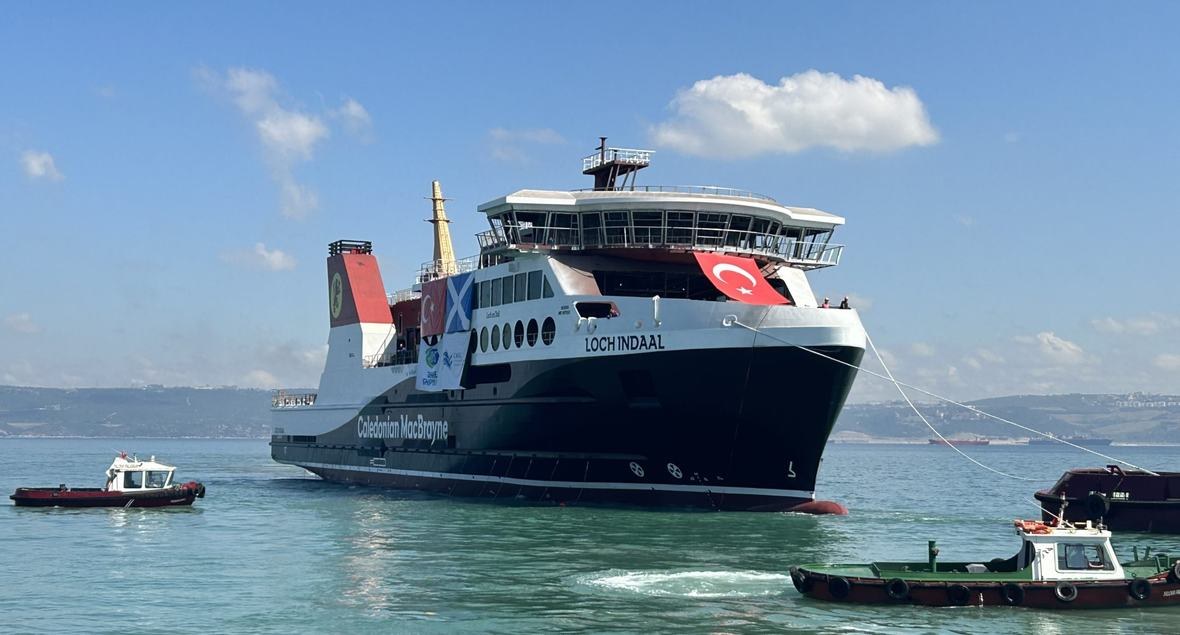
After years of delay, diesel-electric ferry Loch Indaal is finally almost homeMarine HEV-equivalent, no plug
Years late and dogged by earthquakes, steel shortages and a shipyard labour crunch, the diesel-electric ferry MV Loch Indaal is now within weeks of the voyage that finally brings her home to Scotland.
MV Loch Indaal, the second of four new Caledonian Maritime Assets (CMAL) ferries built at Turkey's Cemre shipyard, is approaching the end of a long delay. A Scottish Parliament Transport Committee letter from CMAL, dated 30 October, confirms the UK's Maritime and Coastguard Agency was due back at the shipyard the week of 9 November for what's expected to be final Flag State approval, followed by a seven to ten day preparation period before the repositioning voyage. Her sister ship, Isle of Islay, made the same roughly two-week Turkey-to-Scotland crossing in February 2026 after years of delay blamed on labour shortages, steel supply problems and the 2023 Turkey-Syria earthquakes.
Fennell Forestry parks its electric log truck until diesel tops $4 a litre
South Australian harvest and haulage operator Fennell Forestry has pulled its battery-electric Kenworth out of service after a two and a half year trial, with owner Wendy Fennell saying diesel would need to climb past $4 a litre before the numbers stack up again. The Janus Electric conversion was quoted at around 400km of range per charge but managed closer to 200km doing real forestry work, and charging infrastructure and network connection fees made the sums worse still. This autumn's diesel spike peaked near $3.39 a litre at some regional bowsers, nowhere near that breakeven line. A Murray Bridge outfit called VE Motion is trying a cheaper workaround instead: an electric trailer that hitches to an existing diesel prime mover, aiming to cut diesel use by half for $200,000 to $400,000.
UNSW's Dr Elli Irannezhad points out battery-electric trucks still sit under 1 per cent of the Australian fleet, and a $400 million federal heavy-vehicle productivity package announced in August is mostly aimed at road access and permits, not charging infrastructure.
Climate Council: Australia paid $9 billion extra for diesel imports in six months
The Climate Council's new report, "Crude Awakening: How Australia Ranks on Fuel Security," puts a hard number on the pain at the pump: roughly $9 billion more spent on diesel imports over the past six months than at normal prices, working out to about $324 extra for every person in the country. Climate Council economist Nicki Hutley says the gap exposes just how thin Australia's fuel security margin really is, given the country imports almost all its diesel and has only a handful of working refineries left standing. The report lands with pump prices still sitting well above long run averages following this year's Iran-related supply shock.
Chery's Stockman confirmed as Australia's only genuine diesel PHEV ute, now with the mechanical 4WD patent to prove itPHEV, genuine diesel
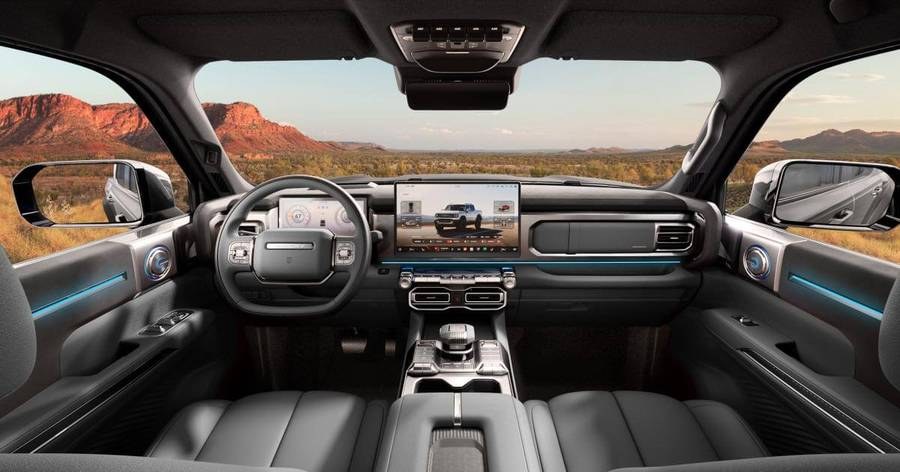
4X4 Australia recently lined the JAC Hunter X up against the Chery Stockman Ultimate on paper, and the comparison is worth separating out properly. The Hunter runs a 2.0 litre turbo-petrol engine with a 31.2kWh battery for up to 100km of electric-only range, priced from $49,988. It's a plug-in hybrid, but it's petrol, not diesel, and stays on our standing false-positive list. The Stockman is the real article: a 2.5 litre turbo-diesel paired with a 34kWh battery, 350kW and 800Nm combined, priced from $52,990, and Australia's only genuine diesel PHEV ute.
A Chery patent filing, lodged in October 2025 and surfaced by CarNewsChina this month, now backs up exactly how that drivetrain works. It's a longitudinal layout with two electric motors, a disconnect clutch and a proper mechanical transfer case feeding both axles through conventional differentials, not the electric rear-drive setup BYD uses in its Shark 6. Chery keeps selectable 4H and 4L plus diff locks, which the Shark 6 drops entirely, a deliberate choice according to chief engineer Mark Qi, so the diesel engine can still drive the rear wheels directly on steep climbs.
Turners Automotive's truck and machinery arm takes an 18 per cent revenue hit
Turners Automotive Group's half-year report, filed with the NZX on 20 November, shows revenue in its Trucks and Machinery division down 18 per cent for the six months to 30 September, even as the wider group posted a record result: total revenue up 3 per cent to $225.3 million and net profit after tax up 4 per cent to $22.6 million. Turners links the slide directly to the oil price shock that followed the Iran-US conflict in late February, saying demand and pricing for larger and diesel vehicles both fell away. Its core Auto Retail business held up much better, down just 1 per cent. Group EBIT was $35.3 million, and the company declared an 8.0 cent fully imputed dividend.
Australia's diesel numbers are grim, but the "36 to 63 days" fix isn't actually a Grattan finding
Energy Minister Chris Bowen's own figures, reported in mid-October, had Australia sitting on just 33 days of diesel, 41 of petrol and 28 of jet fuel, nowhere near the International Energy Agency's 90-day benchmark for net oil importers. Most of that fuel comes in from Asian refineries, so a shipping hiccup or a Middle East flare-up bites hard and fast, as diesel prices already have this year. A string of recent headlines pinned the line "electrify road freight to stretch reserves from 36 to 63 days" on the Grattan Institute. It isn't theirs. That modelling actually comes from the Superpower Institute. Grattan's own energy fellows have separately pushed for bigger reserves and faster freight electrification, so the broad argument still stands, the attribution just got tangled somewhere along the way.
Class action accuses GM of hiding a Duramax oil cooler defect
A proposed class action, Huboff v. General Motors LLC, filed in the US District Court for the Eastern District of Michigan, accuses GM of concealing a defect in the engine oil cooler fitted to 2024 to 2026 (and some 2027) Chevrolet Silverado and GMC Sierra 2500HD and 3500HD trucks running the 6.6 litre L5P Duramax turbo-diesel V8. The suit claims the cooler cracks under normal driving pressure, temperature and vibration, letting oil leak into the coolant system and triggering overheating, power loss or complete engine seizure. Named plaintiff Robert Huboff says his 2024 Silverado 2500HD failed at just 16,453 miles, with a repair quote of $41,319.79 that GM's warranty wouldn't cover. The complaint alleges GM knew of the issue by August 2024, when it quietly issued a dealer bulletin on "possible engine coolant contamination," and kept selling the trucks anyway. GM has not responded publicly.
New Silverado HD's diesel payload trails Ford's Super Duty by 765 pounds
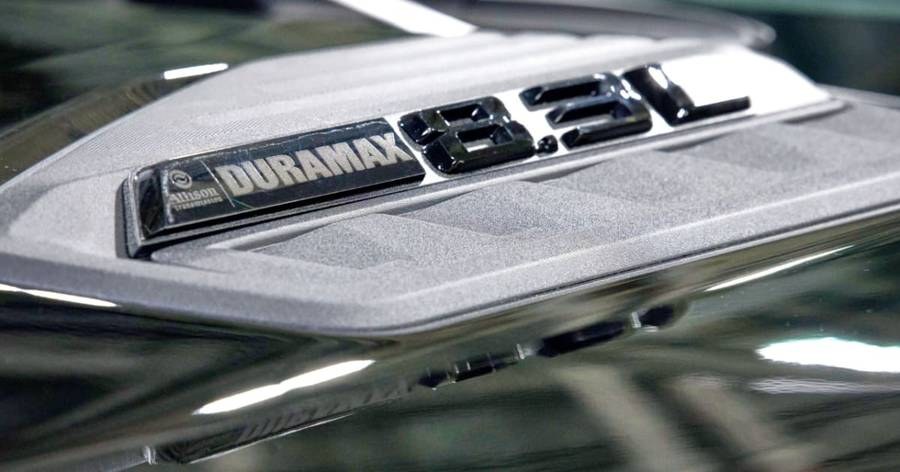
Chevrolet's own Silverado HD product page lists a 6,170lb payload rating for the diesel-powered 2027 Silverado 2500 and 3500 HD, down from the outgoing 2026 Duramax's 6,644lb and 765lb behind Ford's 2027 Super Duty 6.7 litre High Output diesel at 6,935lb. The new 8.3 litre Duramax is rated at 555hp and 1,230lb-ft, which GM calls best in class, and the truck's maximum tow rating climbs to 38,000lb on a regular cab dually, matching Ford's own dually figure even as Ford's gooseneck max reaches 40,000lb. The truck also switches to electric power steering. For work fleets, payload is often the number that actually decides the sale, and on that score Ford still has the edge.
BMW: diesel still makes up two-thirds of X5 sales in AustraliaMHEV, 48V mild hybrid
BMW Australia's Head of Product, Brendan Michel, told BMWblog that diesel is still doing the heavy lifting in the flagship X5, running at 60 to 70 per cent of local sales. BMW's own 2025 figures put it at 66 per cent against 26.5 per cent petrol and 7.5 per cent plug-in hybrid, which helps explain why the fifth-generation X5, launched this year, kept a diesel option at all. BMW won't say whether this year's diesel price spike will shift that mix, instead framing its lineup as a "Power of Choice" for different buyers. The X5's diesel, a 3.0 litre turbocharged inline six badged xDrive40d, runs a 48V mild hybrid system for assist and stop-start only, nothing like the Stockman's plug-in setup.
China's electric heavy trucks now near half of new domestic sales
Battery-electric trucks made up 49.8 per cent of new heavy-truck registrations in China's domestic market in September, 32,800 of 65,800 units, according to compulsory-insurance registration data analysed by CleanTechnica. New-energy heavy trucks, almost all battery-electric, have topped 40 per cent of new sales for five straight months and reached 226,400 vehicles from January to September, up 64 per cent year on year. Tractor units are electrifying even faster, at 64.5 per cent of new registrations. Real-world cost data from the International Council on Clean Transportation backs the economics up: a 28-truck Guangdong warehouse fleet ran 16 per cent cheaper than diesel over five years, and even a 900km-a-day long haul operation with fast charging came in 19 per cent below diesel. Analyst firm Kpler reckons new-energy trucks could displace around 230,000 barrels of diesel a day in China by year's end.
Diesel takes a roughly $2 billion bite out of Walmart's third quarter
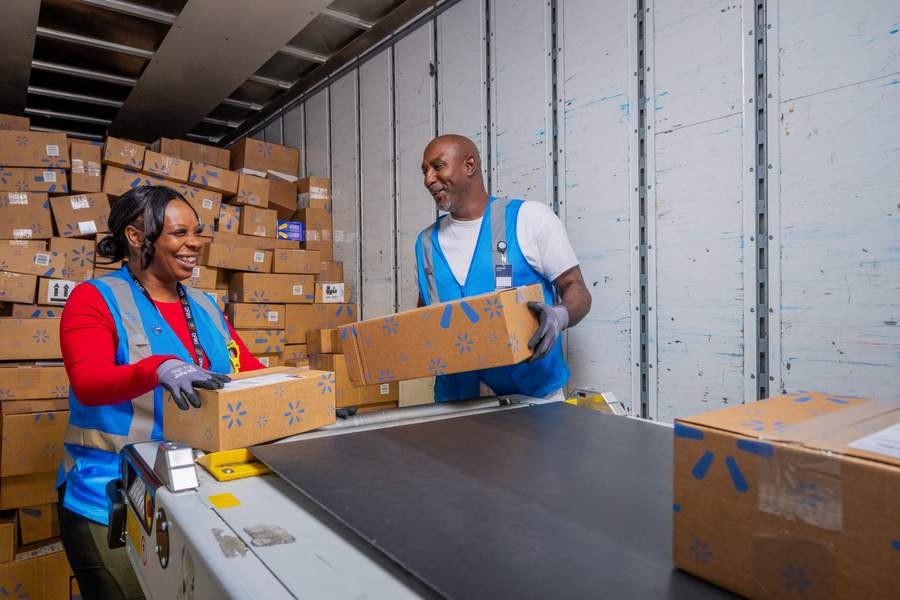
Walmart's Q3 FY2027 results, released 19 November, show the diesel-driven fuel and transportation bill adding roughly $2 billion in extra costs this year. Walmart's own release sticks to "fuel" rather than naming diesel outright, reporting comp sales excluding fuel of 2.9 per cent for Walmart US and 4.9 per cent for Sam's Club, with revenue up 5.2 per cent to $188.84 billion. The diesel framing traces back to a Deutsche Bank analyst note from October, after a meeting with CFO John David Rainey, warning that elevated diesel pressures Walmart directly through transportation costs and could wipe out the benefit of its $2.9 billion tariff refund. A Walmart spokesperson told Business Insider: "Like other retailers, we are not immune to sustained increases in fuel and transportation costs."
Adani Cement rolls out 410 electric trucks, says it will cut 11 million litres of diesel a year
Adani Cement has flagged off the first trucks in a planned 410-strong heavy-duty electric fleet at its Sanghi plant in Gujarat, its first EV deployment for freight. The trucks will haul clinker and cement, and the company projects the fleet will cut more than 25,000 tonnes of CO2 a year and displace the equivalent of 11 million litres of diesel annually. Vinod Bahety, CEO of Adani Group's cement business, called it "just the beginning," framing electrification as a hedge against diesel price swings as much as an emissions cut. The rollout is planned to expand to more plants and routes, though none are named yet, and it follows a wider wave of Indian cement makers, including UltraTech, JK Lakshmi, Dalmia and JK Cement, moving clinker and cement freight onto electric trucks this year.
Amazon soy barges swap diesel for biofuel as Amaggi chases cost cuts

Brazilian crop trader Amaggi is switching more of its Amazon river fleet from diesel to biodiesel, and Bloomberg reports the move is now as much about the bottom line as the climate. Amaggi's push boats haul soy barges along the Madeira and into the wider Amazon system, and the company says one vessel already runs on pure B100 biodiesel, a first for a river vessel in Brazil. Its logistics arm, Hermasa Navegacao, is also building two new 30 metre B100-capable pusher tugs, due in 2027, each able to shove up to 20 barges carrying 32,000 tonnes of grain. With diesel import costs squeezing margins on long-haul river transport, locally made biodiesel cuts both the fuel bill and exposure to global diesel price swings at the same time.
Two locomotives in the Skeena River as CN diesel leaks into northern BC waterway
A CN Rail train derailed about 16km southwest of Terrace, British Columbia, on 17 November, which CN says was caused by a rockslide. Two locomotives and five rail cars loaded with forest products came off the tracks, with some cars going into the Skeena River. CN spokesperson Ashley Michnowski confirmed diesel fuel is leaking from one locomotive's fuel tank and said crews are actively working to contain it, deploying resources into the river to limit environmental damage. Two CN crew members on board were hospitalised in stable condition. This is a separate incident from an earlier CN derailment near Port Edward in March 2026 on the same river system, which spilled nearly 8,000 litres of diesel and has already moved into its recovery phase.
Honolulu sat on a 400,000-gallon diesel spill for months before telling the public
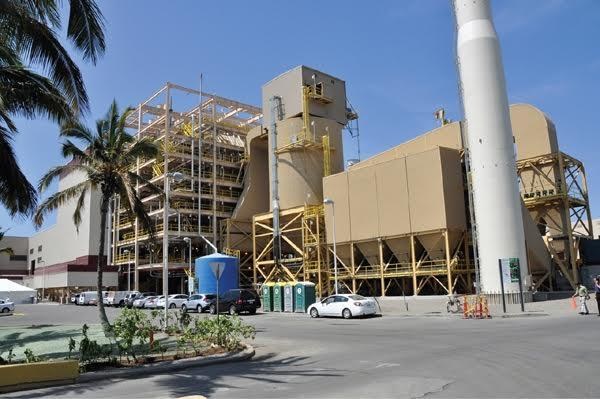
Honolulu's H-POWER waste-to-energy plant at Campbell Industrial Park leaked an estimated 400,000 gallons of No. 2 fuel oil, chemically equivalent to diesel, from an underground pipeline between late January and early May this year. An operator only found a stained patch and a 2.5mm hole in the pipe in May, after noticing a storage tank's fuel level drop. Operator Reworld first told the Department of Health the release might be 6,500 gallons, then revised that to 200,000 to 400,000 gallons in July. Mayor Rick Blangiardi says he wasn't briefed on the full scale until 17 November and apologised publicly two days later, calling the delay a failure to the public. Officials say drinking water isn't at risk, but cleanup will take multiple years. The spill is roughly twenty times the size of the US Navy's 2021 Red Hill leak into Pearl Harbor's water system.
Malaysia's science minister floats hydrogen as a diesel alternative, but calls it unproven
Malaysia's Science, Technology and Innovation Minister, Datuk Chang Lih Kang, told the Dewan Rakyat on 19 November that hydrogen could become an alternative to diesel for heavy commercial vehicles, express buses and long-haul freight, pointing to its energy density for trucks needing long range and heavy loads. He framed it as complementary to EVs, not a replacement push, and was careful to add that feasibility studies are still needed on Malaysia's domestic "grey" hydrogen supply, its carbon intensity and environmental impact before anything firmer can be said. No funding, timeline or pilot was announced alongside the statement, so treat this as a minister thinking out loud rather than a government programme.
Nigeria's diesel imports rocket 917 per cent in a single month
Nigeria's diesel imports jumped to 6.1 million litres a day in October, up 917 per cent from just 0.6 million litres a day in September, according to the Nigerian Midstream and Downstream Petroleum Regulatory Authority's October factsheet. Total diesel supply rose 93 per cent to 16.8 million litres a day, with imports making up about 36 per cent of October's diesel receipts. Domestic consumption rose a more modest 7 per cent to 15.5 million litres, while stock cover fell 12 per cent to 43.9 days, still above the regulator's 30-day minimum. Modular refineries covered only about 5 per cent of benchmark demand, and the Dangote Refinery exported roughly half its diesel output rather than selling it domestically, leaving the gap to imports.
Gallagher flags diesel generator tanks as a real risk at AI data centres
Insurance broker Arthur J. Gallagher has published a report, "Managing Environmental Risk Across the Data Center Lifecycle," warning that diesel backup generators carry their own environmental exposure alongside the better-known battery fire risk. The report notes diesel generators are typically supported by aboveground or underground storage tanks, day tanks and fuel-transfer equipment, and a release from any part of that infrastructure could affect soil, groundwater, stormwater or nearby property. It sits the diesel risk next to lithium-ion battery systems in uninterruptible power supplies, which the report says bring fire and electrolyte-leak hazards that didn't exist in older data processing rooms. Around 30 per cent of planned US data centre capacity is expected to include some form of on-site power generation.
Chevron restarts idled Ralston, Iowa biodiesel plant
Chevron is restarting its biodiesel plant at Ralston, Iowa, which it idled in 2024 after a market downturn. At full production the plant can turn out nearly 42 million gallons of biodiesel a year, enough, Chevron says, to fuel more than 275,000 typical 18-wheelers. The restart is backed by a commercial and operational agreement with Landus Cooperative, a farmer-owned Iowa agriculture group whose neighbouring facility processes more than 28 million bushels of soybeans a year, feeding the plant's feedstock supply. Chevron's Andy Walz, president of downstream, midstream and chemicals, said the move reflects practical steps across the company's system as global oil markets stay tight. The restart is staged, covering staffing, maintenance and safety work, with no firm production date given yet.
DAF shows diesel and electric trucks side by side at RTX Scotland 2026
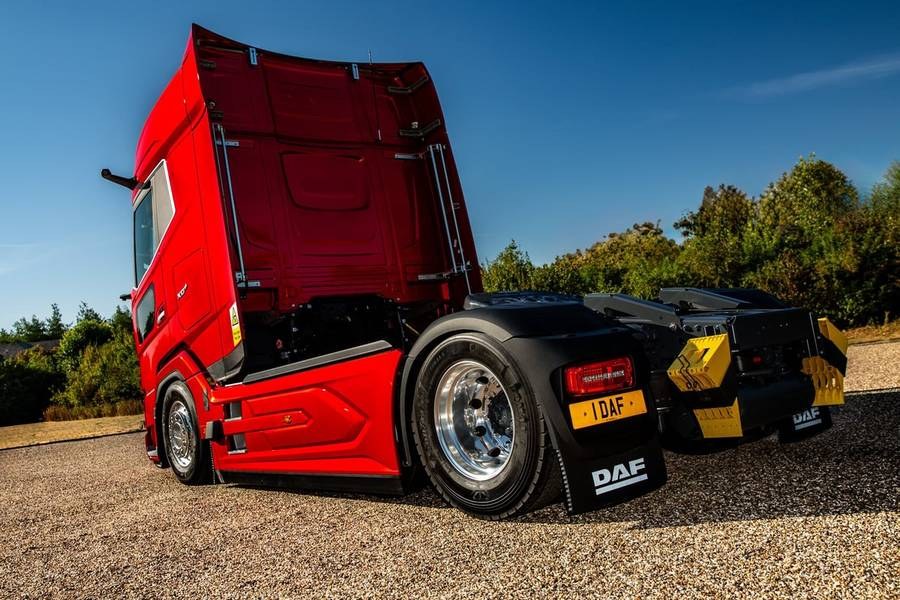
DAF Trucks took stand B20 at Hall 4 of RTX Scotland on 18 and 19 November, running diesel and electric trucks side by side. On the diesel side it brought a new generation XG+ 530 FTP 6x2 tractor in Flame Red, with factory side skirts and a 90cm wide Relax bed shown in the UK for the first time. On the electric side, DAF showed an XD 220 FA Electric 4x2 skiploader built for Biffa Waste Management, fitted with a Boughton Power-Reach skiploader body, a 315kWh battery and a claimed range of up to 150 miles. DAF staff also spoke on zero-emission fleet funding and future freight technology at the show's "Big Debate" session. RTX Scotland runs at SEC Glasgow in its second year, after an inaugural 2025 edition.
Cummins debuts 29 litre S29 mining diesel engine at bauma China
Cummins unveiled the S29, a clean-sheet 29 litre, 12-cylinder diesel engine for mining equipment, at a launch event at its Chongqing plant on 10 November. It's rated up to 1,300hp at 2,100rpm, targets 90 to 120 tonne haul trucks and 150 to 220 tonne excavators plus surface miners, dozers, wheel loaders and dewatering pumps, and is built to run at altitudes up to 3,000m without derating and cold start down to minus 25 degrees Celsius. At launch it runs on diesel, unblended paraffinic fuels and biodiesel blends up to B50, with natural gas, hydrogen and dual fuel versions flagged for development on the same platform. It's now on static display at bauma CHINA in Shanghai, 23 to 27 November, on Cummins' outdoor stand C.78, with production slated for late 2027.
EU's Euro 7 rule starts biting on 29 NovemberFinal
From 29 November 2026, EU type-approval authorities must refuse emissions approval to any new car or van model that doesn't meet Euro 7's pollutant, CO2 and battery-durability rules, under Article 10(4) of the already-adopted Regulation (EU) 2024/1257. The same date triggers Article 11(1): member states must stop allowing the sale or fitting of replacement parts for those vehicles unless the parts themselves carry Euro 7 type-approval. It's a narrower bite than it sounds: existing approved models keep selling freely until 29 November 2027, when the registration ban catches up with them too, and heavy trucks and buses get until 2028 or 2029. For workshops, the practical trigger is the parts rule, anyone sourcing aftermarket components for new-type cars and vans should start checking Euro 7 approval status now.
South Africa cuts its diesel fuel levy by up to R3 a litreFinal

South African Finance Minister Enoch Godongwana used his Medium-Term Budget Policy Statement on 21 October to announce a temporary cut to the general fuel levy, worth R10 billion in forgone revenue. From 4 November to 1 December, the levy on diesel drops by R3.00 a litre and on petrol by R1.50 a litre. From 2 December the relief steps down to R1.50 a litre for diesel, running through to 5 January 2027. Godongwana said the measure would ease cost-of-living pressure without blowing out the budget, funded by returning R10 billion previously parked with the Central Energy Fund to the National Revenue Fund. It's the second such relief package this year, after an earlier, larger cut from April to May.
Russian diesel tankers meant for America turn up anchored off Brazil instead
Two tankers loaded with Russian diesel under October's Trump-Putin sanctions waiver, the Leruo and the Primorye, have reached the Itacoatiara anchorage on Brazil's Amazon River, according to vessel-tracking data reported by The Maritime Executive. A third tanker, the Beast, is sailing the same route. The Leruo left Primorsk on 16 October bound for the US, switched toward Brazil as American buyers balked at the cargo, briefly turned back toward the US, then settled on Brazil again in early November. No port authority, customs record or buyer has confirmed any cargo has actually been unloaded, so "arrived" and "discharged" are two different things here. Separately, CNN's review of MarineTraffic data found zero tankers under the deal have reached a US port at all.
LA's port diesel pollution down 90 per cent in 20 yearsFinal
The Port of Los Angeles says diesel particulate matter from port-related activity is down 90 per cent since 2005 and 15 per cent since 2017, when it and the Port of Long Beach updated their joint Clean Air Action Plan, now marking its 20th year. The standout figure is trucks: diesel particulate from drayage trucks fell 16 per cent in 2025 alone and 98 per cent since 2005, which the Port credits to older diesel trucks being replaced by newer, cleaner ones under its Clean Truck Program. Cargo-handling equipment is down 83 per cent since 2005, ships 94 per cent, and locomotives 45 per cent. The figures cover 2025 trade activity and were released as container volumes kept growing, so the Port cut pollution while moving more cargo, not less, a genuine good-news story for anyone who assumed a busy port and cleaner air can't go together.
VW's dieselgate marathon grinds into what's "probably" its last Braunschweig trial
Volkswagen's diesel emissions scandal is still working through the Braunschweig Regional Court, with two more criminal trials opening in November. The fourth trial, against three former VW staff (originally eleven, until eight paid fines to avoid court, including a former head of Volkswagen Group of America who reportedly paid 48,500 euros), had its opening delayed earlier in the month when a defendant was absent for health reasons. A fifth trial, covering seven more former executives and employees, got underway on 24 November. German news agency dpa calls it probably the last of the Braunschweig dieselgate trials, not the final one outright. Both cases have 150 hearing days pencilled in through to the end of 2028, with charges tracing back to the original defeat-device software developed between 2006 and 2015.
Watch List
- Isuzu's D-Max and MU-X PHEV saga, still no confirmed diesel plug-in spec out of Isuzu itself.
- GWM's Hi4-G diesel-hybrid, China launch still tracking early 2027, Australian timing unconfirmed.
- Stellantis' diesel-hybrid trial for the next-gen Ducato at Pratola Serra, awaiting the flagged December business-plan announcement at Cassino.
- India's Project 75(I) diesel-electric submarines, nearing Cabinet approval.
- Edison Motors' diesel-electric pickup conversion kit, still verifying conflicting engine specs before we run it.
- NCVER's overdue apprentice and trainee figures, due this month per its own schedule but not yet published.